
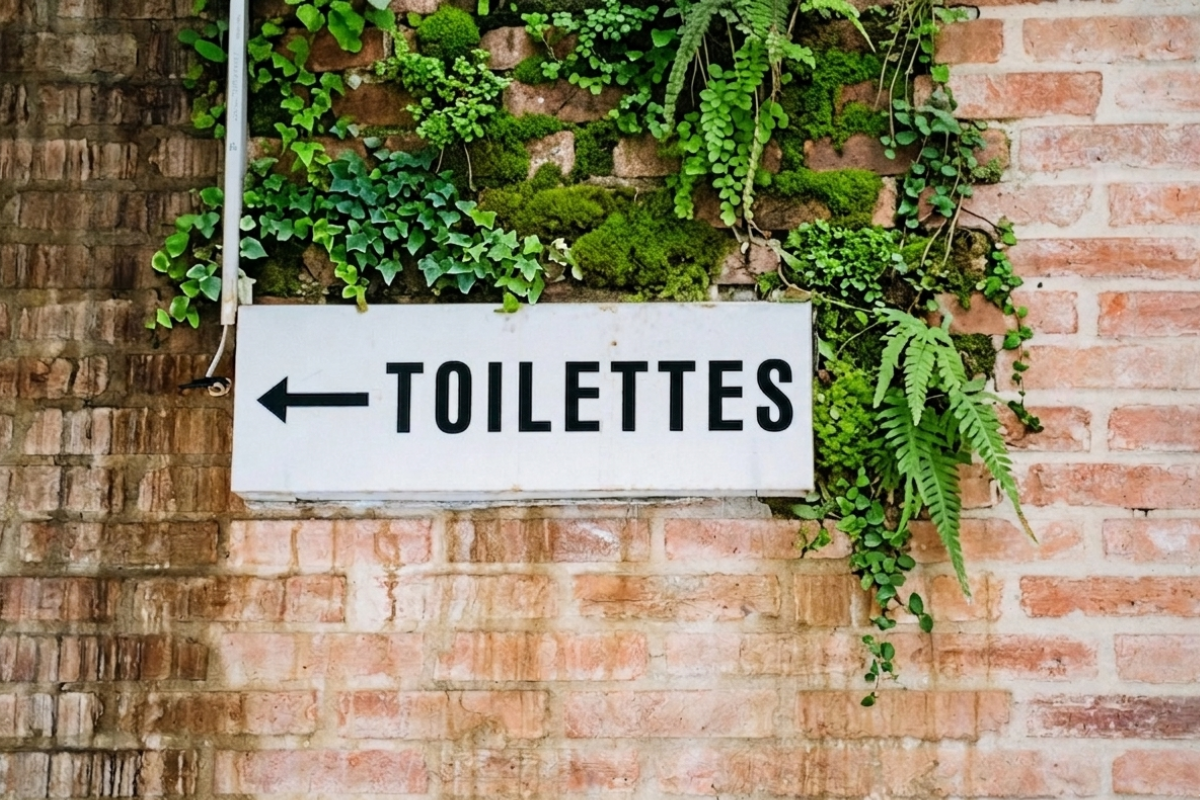
Too many everyday habits go under the radar. We flush without thinking too much about it, assuming everything is treated with no consequences. Yet sewer systems and treatment plants aren't designed to absorb anything other than domestic wastewater and toilet paper.
The toilet isn't a bin
Treatment plants perform an essential function: they treat domestic wastewater before it returns to the natural environment, but this system has a limit. It's designed to handle liquids and fine, easily degradable organic matter. As soon as you add solid, greasy, fibrous or insoluble items, the balance is thrown off. These inputs don't disappear: they clump together and disrupt the treatment processes.
In some cases, the pressure on the networks becomes such that the infrastructure overflows, particularly during heavy rainfall. Some of the water can then be discharged into natural environments without full treatment.
Cooking oils and fats: a habit that blocks pipes
Pouring cooking oil or fat down the toilet seems like a quick, simple solution. The action feels smooth, almost logical: a liquid that goes off with the water, no fuss. In the pipes, the reality is very different…
On contact with lower temperatures, fats gradually solidify. They lose their fluidity, cling to the pipe walls and catch other residues along the way (soaps, fibres, organic deposits). Little by little, these build-ups form compact masses that are hard to shift. In the most advanced cases, they greatly reduce the diameter of the pipes, to the point of causing complete blockages and backflows.
This phenomenon isn't just a domestic problem: it also affects collective sewer networks, which then have to be cleared or repaired.
To avoid these problems, cooking oils and fats should be dealt with separately, via dedicated channels or collection points at recycling centres. Managing them separately avoids their accumulation in the infrastructure and keeps the networks working properly.
Medicines flushed down the toilet: an invisible risk for aquatic environments
Medicines don't disappear once flushed down the toilet. Even diluted, their active ingredients can partly resist treatment at treatment plants.
These facilities are effective at treating conventional organic matter, but they aren't designed to remove all pharmaceutical molecules. As a result, some substances end up in waterways, soils or groundwater, at low but repeated concentrations. Over time, this diffuse presence becomes hard to control.
This type of pollution is discreet, almost invisible, but it's long-lasting and can interact with aquatic ecosystems, particularly wildlife continuously exposed to these chemical residues.
To limit this impact, there's a simple habit: take unused medicines back to the pharmacy. This collection route allows them to be destroyed through suitable channels, without passing through domestic water networks.
Sanitary products flushed down the toilet
Tampons, sanitary pads and panty liners aren't designed to be flushed down the toilet. Their structure is meant to absorb moisture, not to break down in water.
On contact with the pipes, these products can swell, break apart only with difficulty and gradually accumulate. In time, they risk forming blockages in the drainage networks, potentially completely obstructing the system, whether domestic or collective.
The problem doesn't stop at the plumbing. Once flushed away, this waste joins the wastewater networks, where its partial breakdown complicates the work of treatment plants, which aren't designed to treat this type of solid residue.
Added to this is the question of their composition. Depending on the materials used and the manufacturing processes, some components can slow their breakdown in the environment, extending their impact well beyond their initial use.
In this context, reusable alternatives are gradually developing. Period pants, washable pads or menstrual cups significantly reduce the waste produced by sanitary products, while fitting into a logic of reduction at source.
Cigarette butts and small everyday waste
A cigarette butt seems insignificant. Yet it's among the waste most frequently found in aquatic environments. Behind its small size lies a disproportionate impact: it concentrates many substances from combustion, and its filter breaks down slowly.
On contact with water, it doesn't really disappear. It gradually releases toxic compounds capable of disrupting aquatic ecosystems, even at low concentrations. It's this diffuse, invisible and continuous nature that makes this type of pollution particularly problematic.
What you can safely flush down the toilet without risk to the pipes
As you'll have gathered, toilets aren't designed to take solid waste, but to drain away liquids and items specifically meant to break down in water.
The only household waste really suited to this use remains toilet paper. Its composition is designed to break apart quickly on contact with water, without disrupting the sewer networks or treatment plants.
Everything else belongs to other disposal routes: the household bin, specialist collection points or dedicated sorting channels. This simple distinction helps avoid both domestic blockages and part of the invisible pollution of wastewater.
In summary
Toilets are designed to drain away only toilet paper and the wastewater from everyday domestic use.
Oils and fats, medicines, sanitary products and small everyday waste aren't suited to this route. Once flushed down the toilet, they can cause blockages, disrupt the sewer networks and contribute to diffuse pollution of aquatic environments.
Behind an apparently harmless action — flushing — lies a much larger system, where every bad habit can have both technical and environmental consequences.
Best Sellers

Livraison gratuite dès 49€
Paiement sécurisé
Envoi rapide
Service client réactif