Learn More
Say Goodbye to Disposable Sponges
It's a fact: synthetic sponges are harmful to the environment.
Made from polyurethane, a petroleum derivative, for the absorbent part, and from polyester or nylon fibres for the abrasive side, they are neither biodegradable nor recyclable. Worse still, they release microplastics with every use. These harmful materials contaminate rivers, oceans and the flesh of the fish we eat…
That's not all! Manufacturing them is energy-intensive and generates an average of 150 g of CO₂ per sponge. With their very short lifespan, they're not just costly — they also generate a significant amount of waste.
Choose a Simple, Wholesome Accessory
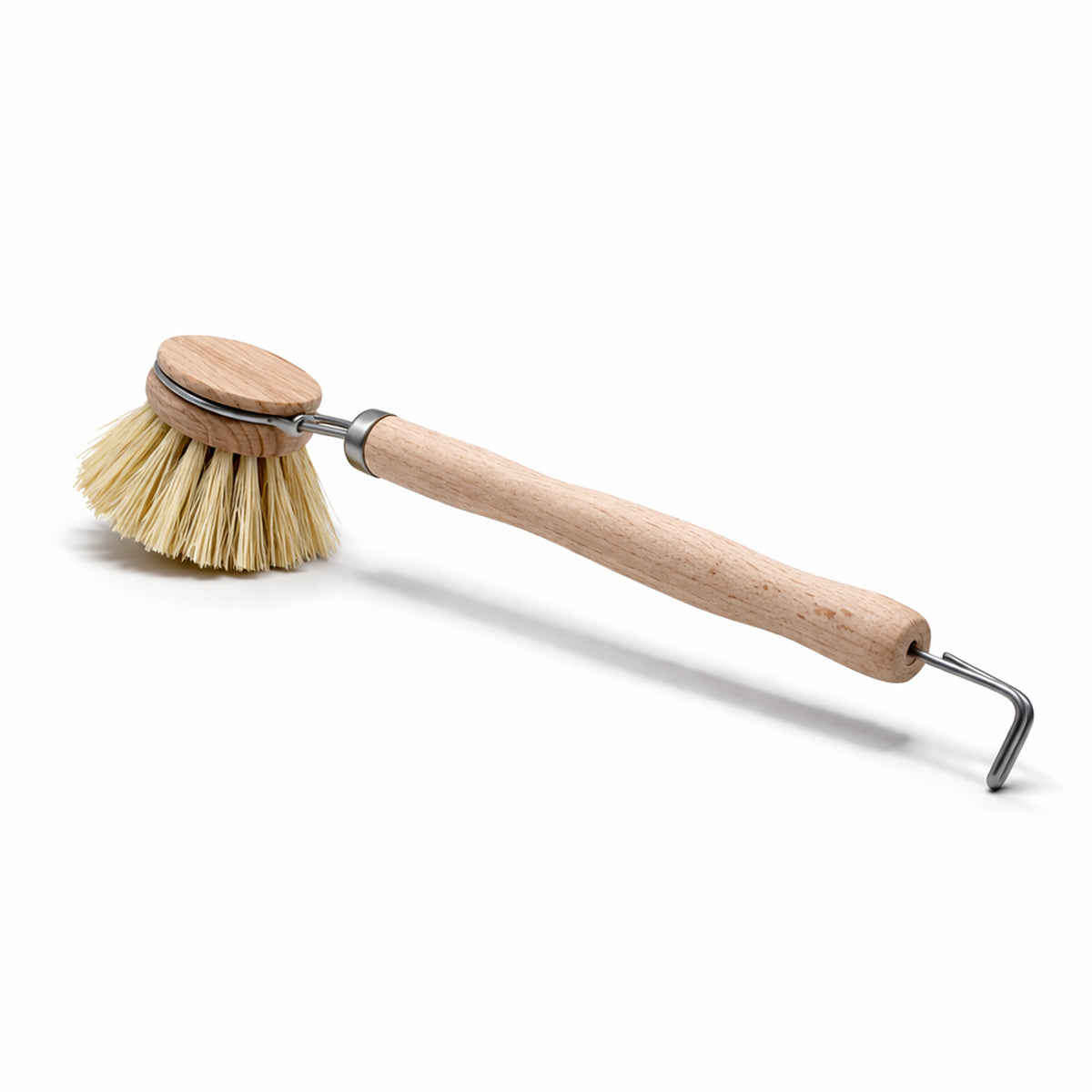
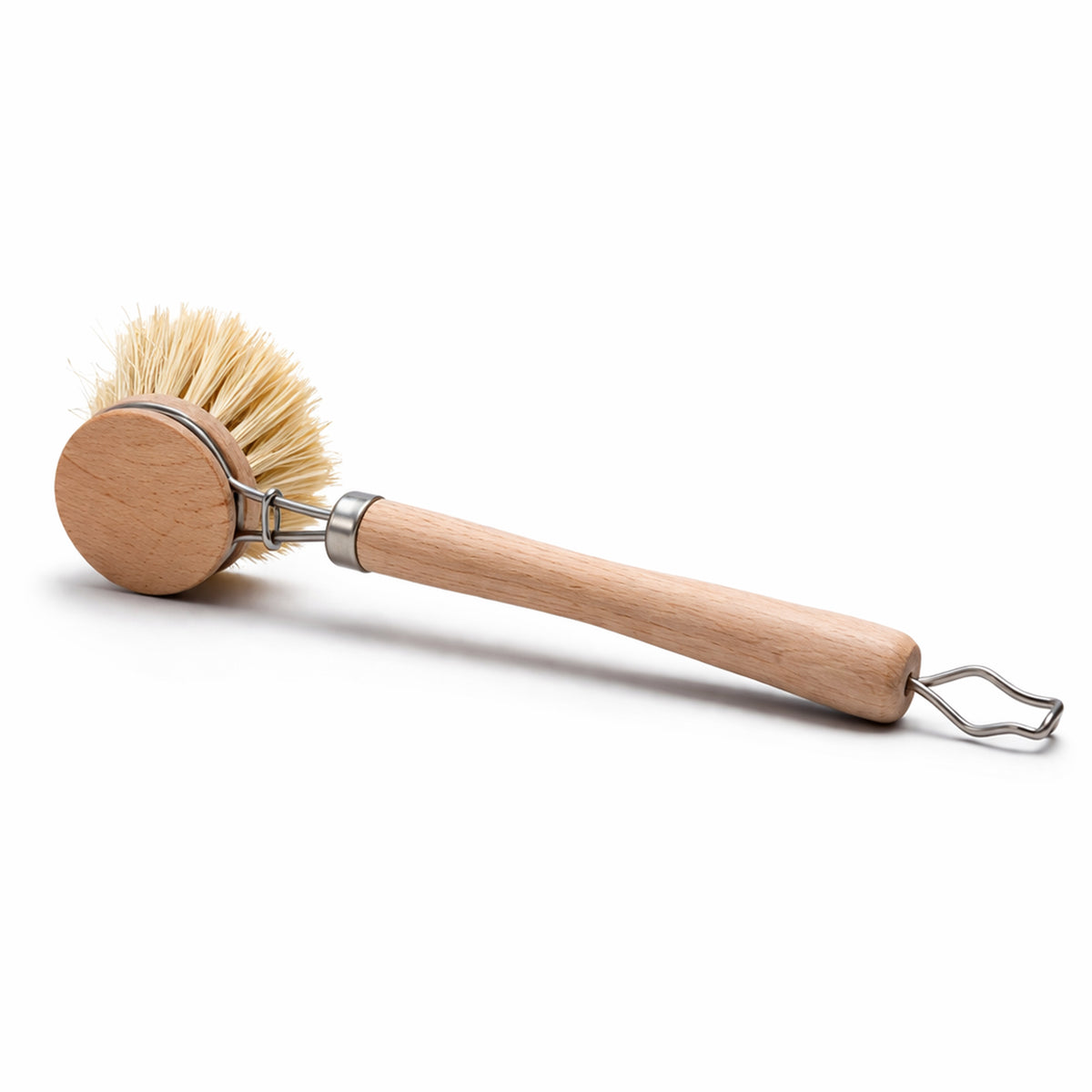
Unlike polluting sponges, the Danika long-handled dish brush is plastic-free, for eco-friendly cleaning. The choice of materials is deliberate: this accessory is made from wood (biodegradable), tampico fibre (compostable) and steel (recyclable).
For a zero-waste daily routine, discover our mandarin washing-up liquid , our washable sponges and our home care products.
FAQ
1. What is the tampico fibre used for the bristles?
Tampico is a plant fibre derived from the leaves of a variety of Mexican agave. It's a strong, durable and biodegradable material, ideal for effectively cleaning dishes without scratching them.
2. Why switch to Danika's wooden accessories?
By choosing Danika's durable accessories, you're opting for an eco-responsible approach while supporting local production. Our wood and tampico dish brushes are made in France, using simple, planet-friendly materials.
3. What is the average lifespan of a wooden dish brush?
With regular care, this Danika brush can last several months to a year — far longer than a disposable sponge.