
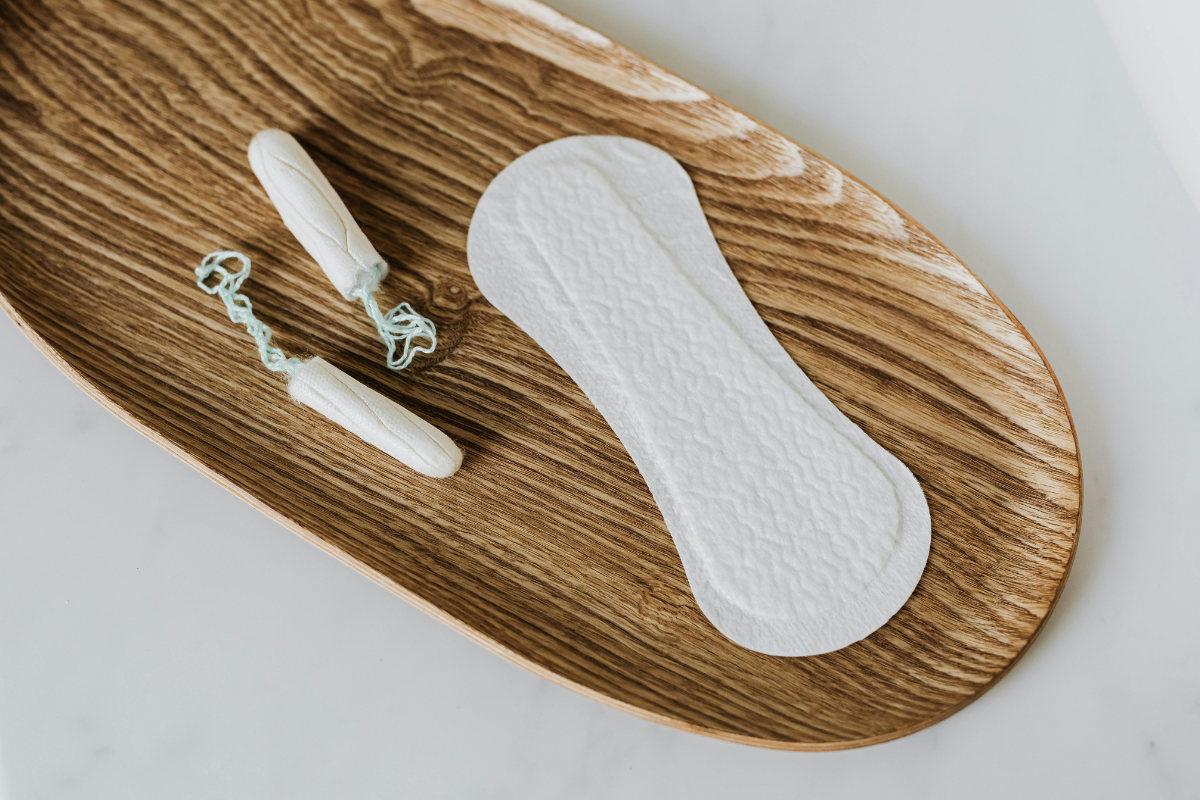
Is it dangerous to wear a sanitary pad? Do tampons pose a risk? How long can you keep them in? And above all, should you be worried about toxic shock syndrome?
In this article, we take a clear, evidence-based look at the potential risks, good practice and the alternatives available.
Tampons and sanitary pads: is there a danger?
Sanitary pads and tampons are widely used products and considered safe when used correctly.
However, like any product in prolonged contact with the body, they aren't entirely neutral.
Two main topics come up when we talk about risks:
-
toxic shock syndrome (TSS)
-
the potential composition of certain products
Beyond these two points, you also have to consider the environmental impact and the cost over time, which play an important role in many women's choices today.
Toxic shock syndrome (TSS): the main risk with tampons
What is toxic shock syndrome?
Toxic shock syndrome is a rare but serious infection, linked to a toxin produced by certain bacteria, such as Staphylococcus aureus.
It can occur when bacteria develop in certain conditions, for example with prolonged tampon use.
Around 1% of women carry Staphylococcus aureus, which explains why the risk remains very low across the population, but real for some people.
How can you avoid TSS?
TSS remains very rare, but the risk increases when a tampon is left in too long. That's why medical guidance is clear: a tampon should be changed every 4 to 6 hours at most. The risk isn't linked to the product alone, but to how long it's used for.
Note: at night, it's recommended not to exceed 4 to 6 hours, or to favour an alternative such as a pad or period pants before going to sleep.
How long can you keep a sanitary pad on?
A pad can be worn for longer than a tampon, but it should be changed regularly for hygiene reasons.
Wearing one for too long encourages:
-
prolonged dampness
-
irritation
-
unpleasant odours
-
bacterial growth
The composition of period products: what should you know?
Some independent analyses have raised questions about traces of certain substances in some period products (tampons and pads).
Depending on the studies, these can include:
-
pesticide residues (including glyphosate at trace levels, in some cases)
-
dioxins (from bleaching processes)
-
phthalates
-
halogenated compounds
These substances are monitored, as some are classified as potential endocrine disruptors.
Studies have found traces of these substances even in some certified organic brands (for example brands carrying the Oeko-Tex, GOTS, Icea, Nordic Swan Ecolabel or FSC Mix labels).
👉 Important: they're generally present at trace levels, but these results have helped strengthen the demand for transparency about composition.
Sanitary pads and the environment: an often underestimated impact
Beyond health, disposable period products also raise an important environmental question.
A sanitary pad or a tampon:
-
isn't recyclable
-
takes several hundred years to break down
-
generates large quantities of waste
It's estimated that billions of period products are used around the world every year. That makes it a major environmental issue linked to plastic waste and non-biodegradable absorbent materials.
What are the alternatives to sanitary pads and tampons?
Faced with these issues, more and more people are turning to reusable or more sustainable alternatives.
Today, several solutions exist:
-
Period pants, which offer reusable, washable absorbency.
-
The menstrual cup, which is reusable.
-
The menstrual disc, an alternative close to the cup.
-
Washable pads, made of fabric and reusable after washing.
-
Natural menstrual sponges, used in a more traditional way.
-
Free instinctive flow, which involves controlling and releasing the flow without an internal or external product.
Each solution has its advantages and depends on lifestyle and the comfort sought.
In summary:
-
There is a risk of toxic shock syndrome (TSS), particularly with tampons used incorrectly.
-
Their composition isn't always known, as manufacturers aren't required to detail it.
-
They contain traces of dioxins, glyphosate, phthalates and halogenated compounds — endocrine disruptors known for their potential impact on health.
-
Certified brands aren't necessarily less toxic for the body than conventional ones.
-
Disposable products are a danger to the environment: not recyclable, several hundred years to break down, generating massive amounts of waste.
-
They're more expensive over time.
-
Alternatives that are kinder to the planet, to your body and cheaper do exist: washable pads, period pants, cups, menstrual discs, panty liners, menstrual sponges, free instinctive flow.
FAQ
Is it dangerous to wear a sanitary pad?
No, a sanitary pad is safe when used correctly. The main risk comes from wearing one for too long and not changing it often enough.
Are tampons dangerous?
Tampons aren't dangerous in themselves, but using them incorrectly can increase the risk of toxic shock syndrome.
When should you change a sanitary pad?
Generally, every 4 to 6 hours to avoid irritation and bacterial growth.
Is toxic shock syndrome common?
No, it remains very rare, but it's serious and justifies strict hygiene rules.
Are there healthier alternatives?
Yes, reusable products such as period pants or the menstrual cup are increasingly used.
Best Sellers


Livraison gratuite dès 49€

Paiement sécurisé

Envoi rapide

Service client réactif