
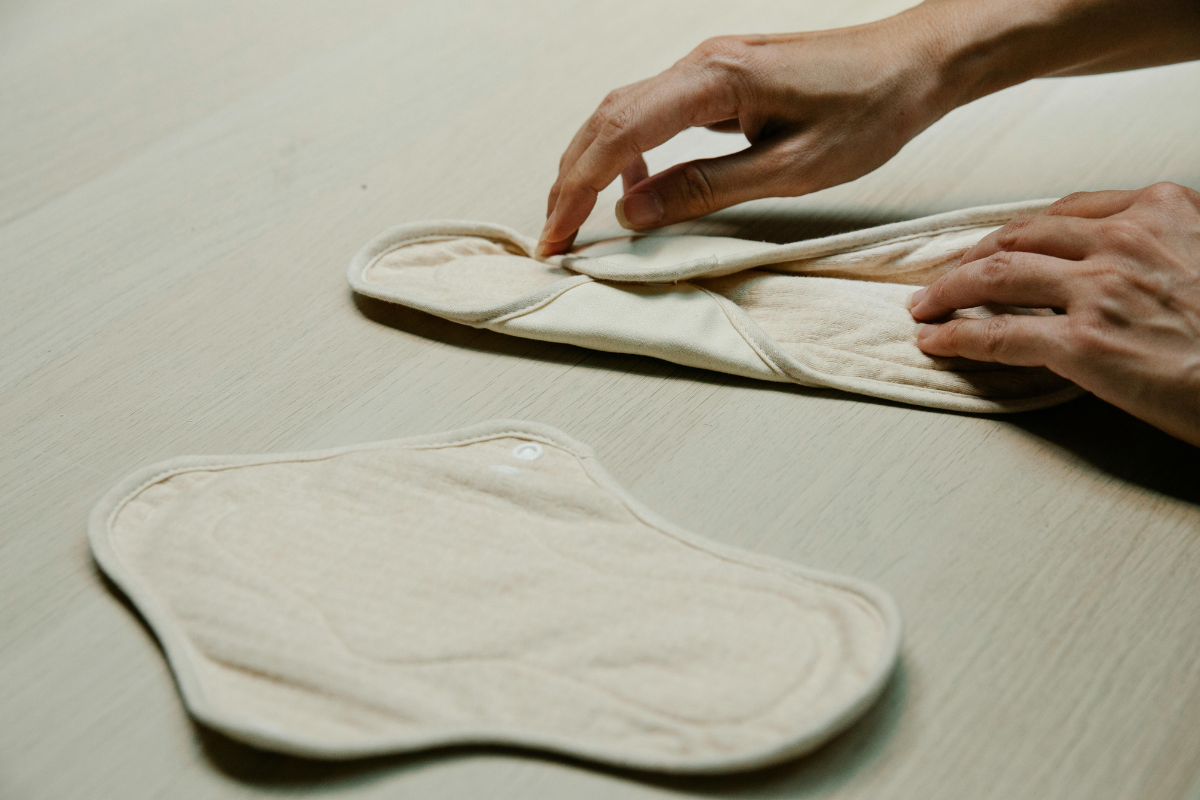
Period pants and washable pads are two reusable period products that replace disposable ones. The first is built directly into a piece of underwear, while the second attaches to conventional pants.
Period pants or washable pads: what's the difference?
Period pants are an absorbent product built directly into a piece of underwear. They particularly suit people looking for a comfortable, discreet solution with no frequent changing.
The washable pad is an external product that attaches to conventional pants. It offers more flexibility since it can be changed easily during the day.
| Period pants | Washable pad | |
|---|---|---|
| How it works | Absorbent underwear, protection built in | External product to attach |
| Comfort | More stable, less handling | More flexible, easy to change |
| Ideal use | Long days, nights, sport | Variable flow, frequent changing |
| Care | Wash after use | Wash after use |
| Price | Higher upfront investment | More affordable |
Two solutions based on the same logic
Period pants and washable pads have one thing in common: they replace disposable products with absorbent textiles, designed to be washed and reused.
They're made from several layers of technical fabrics, based on cotton or certified textile fibres. Their role is simple: absorb the flow, limit leaks and neutralise odours without resorting to controversial substances or added fragrances.
Aesthetically, both options have evolved. Period pants aim for discreet integration into an everyday garment, while washable pads play more on modularity and lightness.
In both cases, care rests on a basic rule: a gentle wash, ideally with a cold rinse beforehand to make removing residue easier.
Differences that really affect use
It's in everyday experience that the differences become more visible.
Period pants are designed as a garment in their own right. They see you through a whole day without needing frequent changes, depending on the flow. This continuity makes them an option often appreciated for active days or nights.
Washable pads work more as a modular product. They can be changed more easily during the day, which makes them attractive for those who prefer to adjust their washable period product according to changes in flow.
The level of comfort then depends on personal preferences. Some prefer the enveloping feel of the pants, others the freedom of the pad.
Financially, the pad is often cheaper to buy, but the pants can prove more practical in the long run by limiting changes during the day.
The environmental impact of period pants or a washable pad
The main benefit of washable period products is reducing the amount of waste generated by disposable products.
A conventional sanitary pad or tampon is used for a few hours before being thrown away. An alternative to disposable products, by contrast, can be reused for several years if it's properly cared for.
However, the environmental impact doesn't depend solely on the product being reusable. The manufacture of the textile, the water use linked to washing and the actual length of use also come into play.
A quality product, worn for a long time and cared for with suitable wash cycles, will generally be more worthwhile than a washable product that's quickly replaced.
Caring for period pants or washable pads: an often underestimated point
The durability of these washable products depends largely on how they're cared for:
- Too harsh a wash can damage the absorbent fibres, reduce their effectiveness and shorten their lifespan. Conversely, gentle care preserves their performance over time.
- Machine washing is possible at low or medium temperature. Some more delicate materials, however, require gentler cycles.
- Air drying remains preferable to avoid damaging the technical fibres. The tumble dryer is not advised.
Which detergent should you use to preserve your period underwear?
The choice of detergent plays a direct role in the lifespan and effectiveness of reusable period products. The aim isn't just to clean, but to preserve the absorbent fibres, the elasticity and the breathability of the fabrics.
Ideally, it's recommended to favour a gentle laundry detergent, without harsh agents, optical brighteners or overly concentrated fragrances. These components, sometimes present in conventional detergents, can clog the technical fibres and gradually reduce their absorbency.
So-called “sensitive” or “hypoallergenic” formulas are better suited, as they limit residue on the textiles. A detergent too rich in cleaning agents or softeners can, over time, impair the product's performance.
Fabric softeners should be avoided. They leave a film on the fibres that can reduce absorbency and change the fabric's breathability. For some occasional uses, a careful rinse is more than enough to keep the textile supple.
Finally, the dose matters as much as the formula. An excessive amount of detergent doesn't clean better, but increases the risk of residue. Moderate use remains more effective and kinder to the materials.
Period pants or washable pad: how do you choose between the two?
The choice depends mainly on lifestyle and the comfort sought. Period pants suit those looking for a continuous solution with no handling during the day. Washable pads may suit those who prefer to adjust their protection more easily or alternate depending on the point in their cycle.
| Need | Recommended product |
|---|---|
| Not changing often | Period pants |
| Active day | Period pants |
| Variable flow | Washable pad |
| Small budget to start | Washable pad |
| Night | Suitable period pants or a long washable pad |
| Trying before investing | Washable pad |
In summary
Period pants and washable pads rest on the same idea: replacing disposable products with reusable solutions, designed to last and fit into everyday life. Their difference isn't only in their form, but in how they're used.
Period pants work like an absorbent garment, suited to long periods without changing, particularly during the day or at night. The washable pad, more modular, lets you adjust protection more easily as the flow changes.
In both cases, effectiveness depends as much on the product as on its care: a gentle wash, a cold-water rinse beforehand, a controlled temperature and natural drying are decisive for preserving the fibres over time.
The final choice rests above all on a personal balance between comfort, flow, lifestyle and your relationship with care. There's no universal solution, but uses to adapt.
FAQ
What's the main difference between period pants and a washable pad?
Period pants are an absorbent piece of underwear with the protection built in, designed to be worn on their own for several hours. A washable pad is an external product that attaches to conventional underwear and can be changed during the day. The difference is therefore mainly in use: continuity for one, modularity for the other.
Can you wear a washable product all day?
Period pants can be worn for several hours at a time depending on the flow and the model. Washable pads often need changing more frequently. In every case, adapting to the flow remains key: a product should be changed as soon as it reaches its absorbent capacity.
Is it really greener than disposable products?
Overall, reusable period products significantly reduce the waste linked to single-use products. However, their impact also depends on their lifespan, how often they're washed and the care conditions. A well-cared-for product used for a long time will have a smaller impact than a disposable product renewed each month.
How do you care for these reusable products properly without damaging them?
A cold-water rinse after use is recommended to stop blood becoming ingrained in the fibres. Then, machine washing at a moderate temperature is possible, with a gentle detergent. Air drying is preferable, as excessive heat can damage the absorbent fibres and the elastics.
Can you use fabric softeners or vinegar?
Some softeners are inadvisable as they can clog the absorbent fibres. White vinegar is sometimes used in small amounts to limit limescale residue, but its use should remain occasional so as not to weaken the textiles.
Is it suitable for heavy flows?
Both solutions can be suitable, but their effectiveness depends on the model chosen and its absorbent capacity. In some cases, alternating between several products during the day may be necessary. It's therefore important to match the choice to your own flow rather than relying on a general promise.
Can you play sport with these period pants or washable pads?
Period pants are often preferred for physical activity thanks to their stability and support. Washable pads can also be used, but their comfort depends more on how they're fixed in place and the intensity of the activity.
Can you use eco-friendly period products at night?
Many models are designed for night-time use, with reinforced absorbency and a cut suited to limiting leaks when lying down. Night-time comfort depends above all on the product fitting well and on its level of absorbency.
How long do period pants or a washable pad last?
The lifespan depends on the quality of the textile, how often it's used and how it's cared for. With suitable washing and without harsh products, some products can be used for several years before gradually losing effectiveness.
Which materials should you favour for a washable period product?
The composition directly influences everyday comfort and tolerance.
Natural materials such as organic cotton are often appreciated for their softness and breathability. Some alternatives to disposable products also use technical fibres to improve absorbency and limit the feeling of dampness.
To make an informed choice, it can be worth checking:
- the composition of the fabric in contact with the skin
- the possible presence of textile certifications such as GOTS or OEKO-TEX
- the absence of added fragrances
How many pairs of period pants should you allow for?
The number depends on how often you wash and how often you use them. Many people start with 2 to 3 pairs of period pants so they have enough rotation between washes.
Best Sellers

Livraison gratuite dès 49€
Paiement sécurisé

Envoi rapide

Service client réactif