
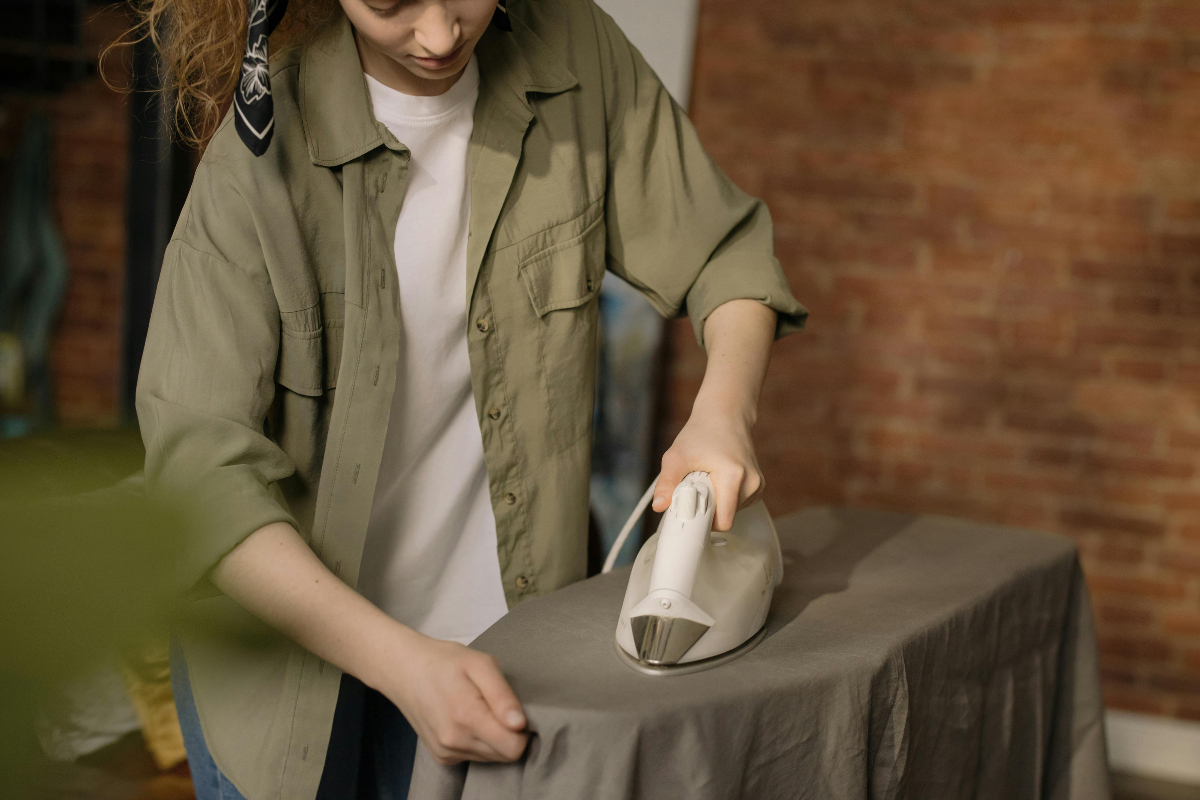
Have you ever damaged a garment while ironing it? A shiny mark, a fibre that warps, or a fabric that loses its shape… In many cases, the problem simply comes from misreading the ironing symbols on the label.
These pictograms, though standardised, aren't always intuitive. Yet they give essential information: the temperature and precautions to respect to preserve your clothes.
In short, 5 tips to iron without damaging your clothes
-
Always read the label before ironing and respect the temperature indicated by the dots.
-
Test first on an inconspicuous area (inside a seam, hem) if you're not sure of the temperature.
-
Protect delicate fabrics with a pressing cloth (a fine, clean cloth) between the iron and the garment.
-
Iron inside out to avoid shiny marks, especially on dark or synthetic fabrics.
-
Start with the most delicate fabrics, then move on to the more resilient ones, so you don't have to wait for the iron to cool down.
Finally, if you want optimal preservation of your delicate fabrics, we recommend our hypoallergenic detergents suited to delicate fabrics as well as the most resilient ones!
Where do you find the ironing symbols?
The ironing symbols are found directly on the care label of your clothes, usually located inside the textile (at the collar, waist or a side seam depending on the item).
They're part of an internationally standardised system of pictograms. This system brings together several pieces of information essential for laundry care: washing, drying, ironing and sometimes professional cleaning. The aim is simple: to explicitly indicate how to care for a garment without damaging it.
How do you read ironing symbols?
In short, the ironing symbol is represented by a stylised iron. It can be accompanied by dots, lines or a cross. The more dots on the symbol, the higher the permitted ironing temperature. Conversely, a cross means ironing is prohibited, because the heat risks irreparably damaging the fibres.
These pictograms are essential, as they let you adapt the ironing to each type of fabric and avoid the most common mistakes such as burns, shiny marks or fibre deformation.

Iron with no dots
When the iron ironing symbol appears on its own, it means the garment can be ironed with no particular restriction indicated by the manufacturer.
However, this doesn't mean all temperatures are suitable. It's still advisable to adapt the iron's heat to the textile's material, particularly to avoid damaging the most sensitive fibres.
Iron with one dot
An iron with one dot indicates low-temperature ironing, generally between 100°C and 130°C.
This setting is intended for delicate textiles that don't cope well with heat, such as certain fine synthetic fibres or fragile fabrics.
Too high a temperature could deform the fabric or leave irreversible marks. In this case, it's better to use a gentle iron and avoid staying too long on the same area.
Iron with two dots
The two-dot ironing symbol indicates medium-temperature ironing, usually 150°C to 180°C.
It's the most common setting for everyday clothes. It suits many materials such as cotton-polyester blends or certain more resilient synthetic fabrics.
This temperature lets you smooth out laundry effectively without taking any risk with the fabric's structure.
Iron with three dots
Three dots correspond to high-temperature ironing, which can go up to 200°C or even 230°C depending on the iron.
This heat level is reserved for the most resilient textiles, such as thick cotton or linen. These materials cope well with heat and often need a high temperature to remove stubborn creases.
It's the setting used for items like sheets, cotton shirts or household linen.
Crossed-out iron
When the iron pictogram is crossed out, it means the garment should not be ironed.
In this case, the heat of the iron can irreversibly alter the fibre: it can melt it, deform it or leave irreversible marks. This symbol must therefore be respected.
Some modern or technical textiles are designed not to need ironing, which explains the presence of this indication.
Iron with lines underneath
When the drawing of an iron is accompanied by lines under the pictogram, it concerns the use of steam.
Two vertical lines indicate that steam can be used. If the symbol is crossed out, it means steam is inadvisable.
Steam can indeed weaken certain fibres, cause deformation or leave marks on the most sensitive fabrics.
How do you iron a garment with no label?
Sometimes a garment no longer has a care label. It may have been cut off, worn away over washes or simply absent on some second-hand or older garments.
In this case, it becomes hard to know exactly the recommended ironing temperature. Yet it's entirely possible to iron a garment with no label by relying on a simple principle: the nature of the fabric.
Ironing delicate fabrics
Delicate fabrics include materials such as silk, viscose, lace or certain very fine synthetic fibres.
These textiles are particularly sensitive to heat. In this case, it's advisable to use a low temperature, generally between 100°C and 130°C. Ironing should be done carefully, without staying too long on the same area.
To further protect the fabric, you can place a slightly damp fine cloth between the iron and the garment. This method reduces direct contact with the heat and limits the risk of damage.
Ironing synthetic fabrics
Synthetic fabrics such as polyester, nylon or acrylic are more resilient than delicate fibres, but they still call for some caution.
These materials don't cope well with temperatures that are too high, as they can deform or partially melt if overheated.
For these textiles, a medium temperature is recommended, usually 150°C to 180°C. This setting is also suited to garments made of fibre blends, such as cotton-polyester, very common in everyday clothes.
This heat level lets you smooth out the textile effectively while preserving its structure.
Ironing cotton and linen
Cotton and linen are among the most resilient natural fibres. They're often used for shirts, sheets, household linen or certain summer items.
These materials cope with high temperatures and often need more heat to remove creases effectively.
In this case, ironing at 200°C to 230°C is generally suitable. This intensity lets you smooth the fibres deeply and get a crisp, lasting result.
Cotton and linen are therefore the easiest fabrics to iron, provided you respect their heat tolerance.
To remember
Ironing symbols tell you exactly the right temperature and conditions for each garment. Understanding them well means avoiding mistakes and extending the life of your textiles.
Ironing a garment with no label is entirely possible, provided you rely on the nature of the fabric.
Delicate materials need low heat, synthetics a moderate temperature, and natural fibres such as cotton or linen cope with high temperatures.
Understanding these differences helps you avoid common mistakes and preserve the quality of your clothes over the long term.
FAQ
How do you recognise ironing symbols?
Ironing symbols appear as an iron with one or more dots, or crossed out. They indicate the maximum permitted temperature and the precautions to respect.
What does an iron with one dot mean?
One dot means low-temperature ironing, suited to delicate fabrics such as silk or certain sensitive synthetic fibres.
What do you do if the ironing pictogram is crossed out?
If the iron is crossed out, the garment should not be ironed. The heat could permanently damage the fabric.
Can you iron a garment with no label?
Yes, by relying on the fabric's material. Delicate fabrics need a low temperature, while cotton and linen cope with high temperatures.
Why do some garments not cope with steam?
Steam can slacken or deform certain synthetic or fragile fibres. That's why some symbols advise against using it.
Best Sellers

Livraison gratuite dès 49€
Paiement sécurisé
Envoi rapide
Service client réactif