
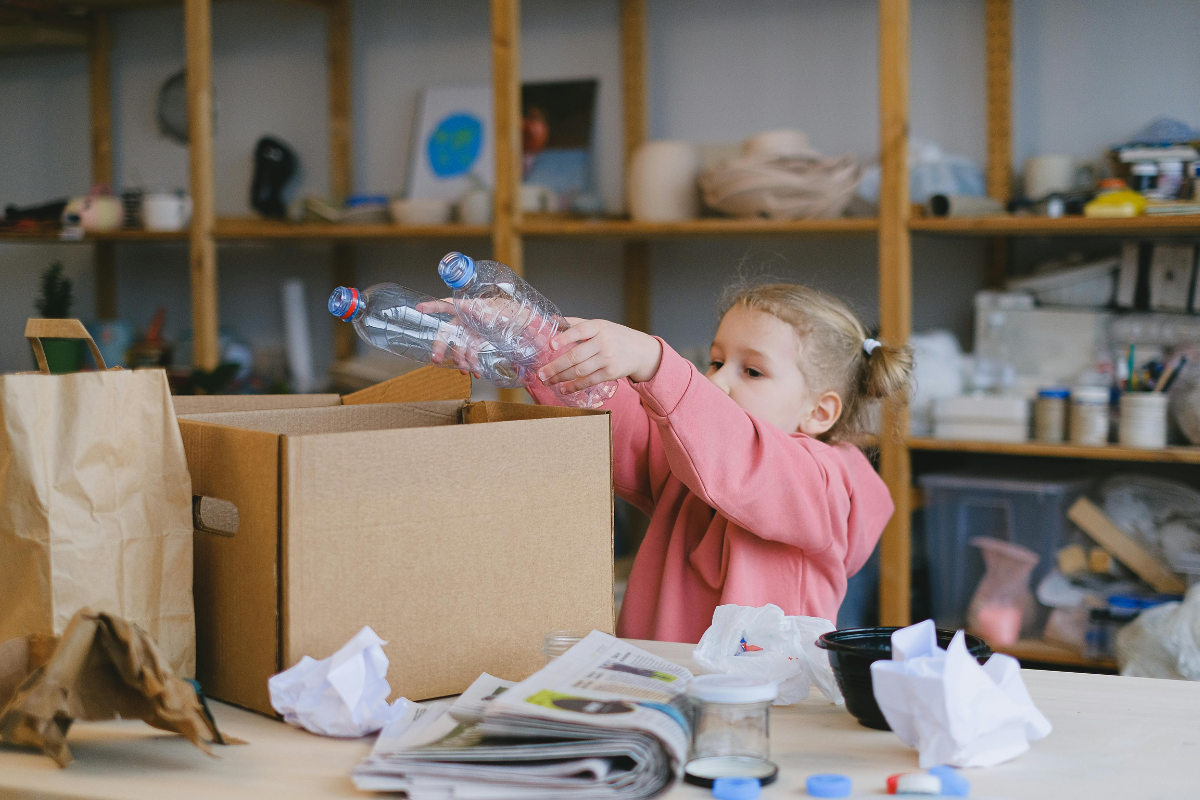
Every year, millions of tonnes of waste are produced in France, and a large share of it still isn't recycled. A reality that underlines the importance of recycling to limit the consequences on the environment. Here's how to sort waste.
Sorting waste: where do you throw light bulbs?
Not all bulbs follow the same sorting channel:
-
Non-recyclable bulbs are the filament models, i.e. incandescent and halogen bulbs. They can be thrown straight in with household waste, with no special arrangement.
-
Recyclable bulbs include LEDs, compact fluorescent lamps, fluorescent tubes and discharge lamps. They can be recognised by the crossed-out bin pictogram. These bulbs shouldn't be thrown in the standard bins. They should be taken to suitable collection points: supermarkets, DIY stores, self-service bins or recycling centres.
Good to know: you can locate the nearest collection points via specialist platforms such as Ecosystem.
Should you put cardboard and paper packaging in a bag?
All waste destined for the recycling bin should be placed loose, without a plastic bag and without nesting items inside one another.
When they're enclosed in bags, they may not be sorted correctly at the treatment centre. Likewise, nested objects complicate sorting and can disrupt the separation of materials in the various recycling channels.
Sorting is evolving: what you can now put in the recycling bin
A few years ago, some packaging was problematic, particularly after a meal like a pizza night.
Today, the rules have changed: pizza boxes and all lightly soiled cardboard (without significant food residue) can be put in the recycling bin.
At the same time, the instructions have been extended to more materials. Metal packaging is now among the accepted waste: tins, small metal packaging, crisp packets, lids and aluminium foil.
This means steel and aluminium join plastics, cardboard and paper in the same packaging-sorting channel.
Sorting waste: where do you throw glass?
You might think all glass objects follow the same recycling channel. Yet that isn't the case.
When you break a glass, a mirror or a household glass object, this waste shouldn't be placed in the glass containers. Contrary to a common belief, it isn't recyclable in this channel and should be thrown away with household waste.
This is also the case for glass crockery, whether broken or still in good condition. It doesn't follow the same route as glass packaging.
The difference is simple to explain: the glass of objects (crockery, mirrors, decorative items) doesn't have the same chemical composition as packaging glass. It doesn't melt at the same temperature and therefore can't be reintegrated into standard recycling processes.
Conversely, glass bottles, jars and pots are perfectly recyclable and should be placed in the dedicated collection points.
Where do you throw bottles of household, gardening or DIY products?
A common mistake is to think all plastics can be put in the recycling bin. In reality, some waste from home cleaning, gardening or DIY doesn't follow the standard recycling channels.
This includes household products, paints, solvents, DIY products, fertilisers and certain barbecue products. This waste can pollute the sorting streams and make recycling impossible when it's directed wrongly. That's one of the reasons a large part of recycling bins is still contaminated by wrong disposal.
These products should be taken to a recycling centre or placed in specific collection points, which have channels suited to their treatment. Depending on the local area, some alternatives may also exist to limit travel.
In this logic, reducing at source remains an effective solution. For example, some household products now come as refills or concentrated formats, helping to limit packaging. Using reusable containers also helps reduce everyday waste.
When in doubt
If doubt remains about the nature of a piece of waste, even after checking the available instructions, it's safer to direct it to the general waste bin. This precaution avoids contaminating the recycling channels.
Summary of the main bins
Yellow, brown, white/green, green/grey bins… the colours can vary from one area to another. Here's a simplified reminder of the main points to find your way more easily.
-
The recycling (yellow) bin is for packaging: plastics, cardboard, paper and metals.
-
The glass bin or the dedicated containers take glass bottles, pots and jars.
-
The household waste bin (often grey or green depending on the area) receives non-recyclable waste, as well as items you're unsure about.
-
The brown bin is generally reserved for bio-waste, such as food scraps and organic waste, where it's provided in the local area.
-
Finally, some recycling centres complement these arrangements for specific or hazardous waste that can't be thrown in the standard bins.
| Bin | Waste concerned | Examples |
|---|---|---|
| Recycling (yellow) bin | Recyclable packaging and paper | Plastic bottles and containers, cardboard boxes, paper, tins, cans, metal packaging |
| Glass container | Glass packaging only | Glass bottles, pots and jars |
| Household waste bin | Non-recyclable waste, or waste that can't go to another channel | Broken crockery, mirrors, household glass objects, heavily soiled packaging, residual waste |
| Bio-waste bin (where available) | Organic waste | Peelings, food scraps, garden waste according to local instructions |
| Recycling centre / specific collection points | Waste needing a dedicated channel | Recyclable bulbs, paints, solvents, DIY products, chemicals, electrical appliances |
FAQ
Which waste goes in the recycling bin?
The recycling bin is for everyday packaging. It mainly takes plastics, cardboard, paper and metal packaging. The important thing is that the waste is empty, not nested and not enclosed in a bag. Pizza boxes, for example, can be thrown in as long as they don't contain food residue.
Should you wash packaging before throwing it away?
No, it isn't necessary to wash packaging before putting it in the recycling bin. You simply need to empty it well. The recycling process is designed to handle light residue, which avoids unnecessary daily water use.
Can you put all plastics in the recycling bin?
Not all plastics are recyclable in the recycling bin. Only packaging is concerned (bottles, containers, pots, films depending on local instructions). Non-packaging plastic objects, such as certain toys or utensils, should generally be taken to a recycling centre or thrown in with household waste.
Where do you throw used light bulbs?
Not all bulbs follow the same channel. LED, compact fluorescent or fluorescent tube models should be taken to a collection point or store. Incandescent or halogen bulbs, on the other hand, can be thrown in with household waste.
What do you do with a broken bulb?
A conventional broken bulb (incandescent or halogen) should be thrown in with household waste. Broken recyclable models should be taken to a recycling centre.
Where do you throw broken glass or glass crockery?
Packaging glass (bottles, pots, jars) is recyclable. However, glass crockery, mirrors or broken objects from household glass shouldn't be placed in the glass containers. They should be thrown in with household waste, because their composition is different and incompatible with standard recycling channels.
Why isn't all glass recycled in the same way?
The difference comes from their composition. Packaging glass melts at a specific temperature and can be remelted to create new containers. So-called household glass (crockery, mirrors) has different additives that prevent its recycling.
Where do you throw household, DIY or gardening products?
These products should never be thrown in the recycling bin. They often contain chemicals that can pollute the recycling channels. They should be taken to a recycling centre or specialist collection points, according to the arrangements put in place by the local authorities.
Are aerosols and barbecue products recyclable?
Some aerosols and barbecue-related products can be recycled, but only in specific channels. If in doubt, it's best to take them to a recycling centre. Products containing flammable or chemical substances should never be thrown in with standard packaging.
Why must some waste not be mixed?
Mixing waste can make an entire recycling batch unusable. For example, poor sorting in the recycling bin can contaminate the materials and prevent them being recovered. That's why sorting centres are very strict about the quality of the incoming streams.
What do you do if you don't know where to throw something?
If unsure, the safest solution is to throw the waste in with household waste. This avoids disrupting the recycling chains. Some local authorities also offer online tools to quickly identify the right channel.
Are the sorting rules the same everywhere?
No, the instructions can vary from one area to another and with local infrastructure. Even though the main points are harmonised nationally, it's always advisable to check the specific rules of your town or local authority.
Best Sellers

Livraison gratuite dès 49€
Paiement sécurisé

Envoi rapide

Service client réactif