
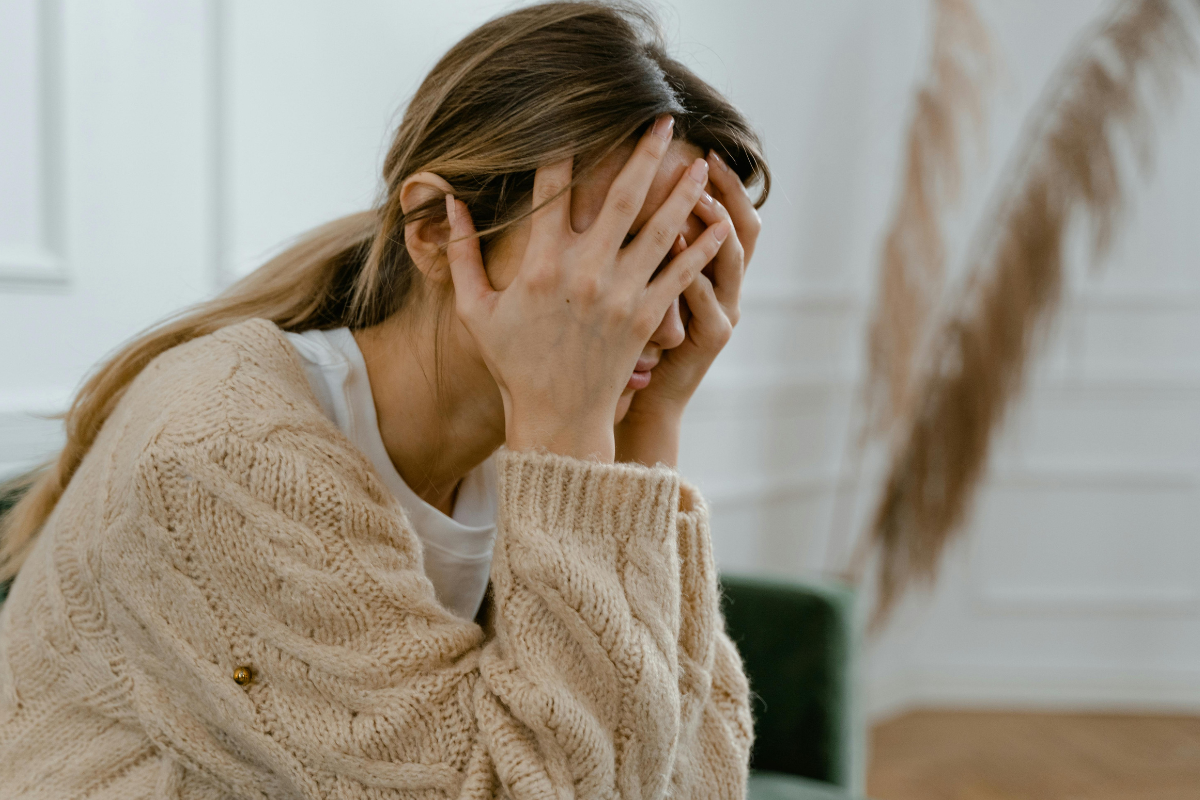
You notice that heatwaves are becoming more frequent, that floods are happening more often and that forest fires are intensifying year after year. You take an interest in climate change, biodiversity, global warming and the +2°C limit mentioned by scientists.
This awareness is far from marginal. It reflects growing attention to environmental issues, but it's sometimes accompanied by another, more intimate and harder-to-name phenomenon: a form of persistent worry about the future.
In some cases, this concern can become overwhelming. It can feed a sense of helplessness, generate anxiety, disrupt sleep or influence important aspects of life, such as picturing the future or the desire to have children.
It's in this context that we now talk about eco-anxiety, a form of worry linked to environmental crises and their consequences for the future.
What is eco-anxiety?
An anxiety linked to the ecological crisis
Eco-anxiety refers to a form of psychological distress linked to awareness of environmental crises, particularly climate change. Increasingly present in contemporary discourse, it reflects a growing worry about the future of the planet and the consequences of human activities on ecosystems.
At the root of this phenomenon is, in particular, the increase in greenhouse gas (GHG) emissions, responsible for climate disruption. According to IPCC projections, this trend is leading to a gradual rise in the global average temperature, with impacts already visible worldwide:
-
An increase in heatwaves, more frequent and more intense
-
A widespread rise in temperatures
-
Ocean acidification
-
The accelerated melting of glaciers in the Arctic and Antarctic
-
Rising sea levels
These transformations deeply weaken ecosystems and accelerate the erosion of biodiversity. They also represent a direct threat to human populations, particularly in coastal areas and the regions most exposed to floods, droughts and extreme weather events.
Environmental concern: the impact on human wellbeing
Anxiety linked to environmental issues intensifies as the effects of climate change on living conditions become more visible. Disrupted rainfall patterns, combined with more frequent extreme weather events such as cyclones or heatwaves, generate constant stress, particularly for already vulnerable populations.
This growing insecurity comes with questions about societies' ability to adapt, limit the impacts or curb global warming. It highlights the scale of today's environmental challenges and their direct repercussions on individual and collective wellbeing.
Distress linked to the ecological crisis: a pressure to act
Faced with these concerns, a growing pressure is felt by many people, prompting them to act to protect the climate. Awareness of the risks linked to climate disruption and of the impact of human activities on the environment thus encourages engagement in ecological actions and concrete initiatives.
Internationally, agreements such as the Paris Agreement aim to limit global warming by reducing greenhouse gas emissions and promoting the development of renewable energy.
However, the response to climate change can't be reduced to institutional and political action alone. It also involves support at an individual and collective level. This means better education on climate issues, but also taking into account the psychological impacts, particularly for people facing eco-anxiety.
How does eco-anxiety show itself?
The stress caused by environmental issues doesn't always present in the same way. It can remain mild and occasional, or become more overwhelming depending on the situation.
Eco-anxiety sometimes takes the form of a diffuse worry about the future, a heightened sensitivity to environmental news or a sense of helplessness in the face of the scale of the challenges.
In some cases, it can influence personal decisions, particularly when it settles in over time and is accompanied by a feeling of emotional saturation.
It's important to note that these reactions remain variable and don't amount to a systematic disorder. They can also be interpreted as a sign of particular attention paid to the issues facing the living world and the climate.
A sensitivity particularly marked among young people
The youngest generations are often the most affected by these concerns. They grow up in an information environment where climate alerts, scientific reports and images of extreme events are very present.
This continuous exposure can reinforce the sense of responsibility or urgency, sometimes associated with a form of emotional fatigue. Some also express difficulty picturing a stable or desirable future.
This feeling varies greatly from person to person, but it's part of a broader trend: that of an increasingly early climate awareness.
How can you live better with worry about the planet's future?
There's no single answer, but several levers can help better regulate this kind of feeling.
One of the first elements concerns exposure to information. The continuous flow of often alarming news can increase mental load. Without cutting yourself off from the subject, it can help to limit automatic checking and favour chosen moments to keep informed, in a calmer and more contextualised way.
Another important lever is taking action. Turning worry into concrete engagement can help restore a sense of coherence. This can take very varied forms: everyday habits, taking part in local initiatives, gradually changing certain consumption habits or getting involved in collective projects.
Finally, putting things in perspective plays an essential role. Eco-anxiety often becomes heavier when experienced in isolation. Talking about it, discussing and sharing your feelings helps move beyond a purely individual logic and place these emotions in a broader context.
Ecological worry: an emotion to understand rather than avoid
Eco-anxiety isn't only a negative signal. It can also reflect a form of attachment to the living world and a heightened sensitivity to the changes in the world.
The point isn't to make it disappear completely, but to prevent it becoming paralysing. It can, in some cases, become a starting point for a broader reflection on your life choices, your priorities and the way you inhabit the world.
Eco-anxiety or ordinary anxiety: what's the difference?
Eco-anxiety can resemble a more general form of anxiety, particularly when it comes with persistent worry, sleep problems or a sense of helplessness. Yet these two phenomena don't rest on exactly the same mechanisms.
Ordinary anxiety is generally linked to personal concerns: health, work, relationships, finances or life events. It often centres on situations that directly concern the individual and over which they're trying to regain a sense of control.
Eco-anxiety, for its part, is rooted in worry about collective and planetary issues. It's linked to the consequences of climate change, the erosion of biodiversity or the degradation of ecosystems. A person may feel fear for the future, not only for themselves, but also for future generations and the living world as a whole.
| Eco-anxiety | General anxiety | |
|---|---|---|
| Origin | Climate crises, loss of biodiversity, degradation of the living world | Personal concerns, life events, individual uncertainties |
| Object of the worry | A collective, planetary future | A personal or close-to-home situation |
| Associated feeling | Difficulty acting in the face of a global problem | Looking for solutions to regain a sense of control |
| Possible response | Engagement, collective action, adapting your relationship with information | Anxiety management strategies, professional support if needed |
In summary
Eco-anxiety is an emotional reaction to today's environmental challenges. It can range from a simple worry to a deeper, more lasting feeling.
It affects a significant part of the population and seems particularly present among younger generations, who are more exposed to climate news.
Rather than seeing it only as a problem, it can also be understood as a signal, inviting us to keep better informed, to act at our own level and to find balance in our relationship with ecological issues.
FAQ
Is eco-anxiety an illness?
Eco-anxiety isn't considered an illness or a psychiatric disorder. It's an emotional reaction to awareness of environmental crises. However, when it becomes very intense and lastingly disrupts everyday life, it may require support from a healthcare professional.
Who is most affected by unease about ecological upheaval?
Eco-anxiety can affect anyone, at any age. It's nonetheless more common among young adults and teenagers, who are growing up in a context marked by climate alerts and environmental concerns. People who are very aware of ecological issues or directly confronted with the consequences of climate change may also be more affected.
What are the main symptoms of ecological mental load?
The signs vary from person to person. They can include persistent worry about the future, a sense of helplessness, sadness at the degradation of the environment, difficulty concentrating, sleep problems or emotional fatigue. In some people, these concerns also influence their life plans.
How do you know if worry about climate change is normal?
It's natural to feel worried about climate issues. This concern becomes more problematic when it takes up a significant place in everyday life, causes lasting distress or prevents you from living a normal life. If these difficulties persist, it's advisable to speak to a healthcare professional.
How can you reduce eco-anxiety?
Several approaches can help you live better with this feeling: limiting exposure to anxiety-inducing information, favouring reliable sources, engaging in concrete actions for the environment, talking with those around you or taking part in collective initiatives. The aim isn't to ignore the problem, but to regain a sense of balance.
Does acting for the environment help reduce fear about environmental disruption?
Adopting concrete habits, taking part in local projects or getting involved in an association can help reduce the sense of helplessness. Even if these actions don't on their own solve the climate challenges, they often help restore a sense of usefulness.
Should you see a psychologist for eco-anxiety?
A consultation can be helpful if eco-anxiety causes significant distress, sleep problems, permanent anxiety or an impact on personal, family or professional life. A psychologist can help you better understand these emotions and develop strategies to manage them.
Can eco-anxiety have positive effects?
When it remains moderate, it can encourage a better understanding of environmental issues, promote more responsible behaviour and strengthen civic engagement. The challenge is to prevent it turning into a feeling of discouragement or paralysis.
What's the difference between eco-anxiety and solastalgia?
Eco-anxiety refers to worry linked to present or future environmental threats. Solastalgia corresponds more to the distress felt at the degradation of a familiar environment, for example after a fire, a drought or a natural disaster that lastingly transforms a place of life.
Can distress linked to ecological change be prevented?
It isn't always possible to avoid it, but certain habits can limit its impact: adopting a measured consumption of information, keeping up activities that support wellbeing, preserving social ties, spending time in nature and gradually turning your concerns into concrete, realistic actions.
Best Sellers















Livraison gratuite dès 49€

Paiement sécurisé

Envoi rapide

Service client réactif