

This article is for everyone who hasn't yet made the switch to natural laundry detergent. Because we're convinced: it can be just as effective as a conventional detergent, with added benefits. For your skin, your health and the environment, let us explain why.
1. Detergent of natural origin is kinder to the environment
Conventional detergents often rely on cocktails of ingredients: powerful washing agents, synthetic fragrances, preservatives, optical brighteners, bleaching agents… With every wash, some of these substances go into the wastewater. And despite the treatment carried out at treatment plants, not all the molecules fully disappear. Some end up in rivers, soils or marine environments.
For a single family, the impact seems negligible, but multiplied by the millions of machines run every day, we're talking about diffuse, continuous pollution that's hard to perceive but very real.
Before 2012, industrial detergents contained phosphates in large quantities. The result: algae proliferation, dead zones, massive disruption of aquatic ecosystems. Their use is now restricted in Europe, but traces still persist in natural environments.
Today, it's other controversial substances that pose a problem: non-biodegradable optical brighteners, harsh preservatives, irritating synthetic fragrances, polymers responsible for microplastics… These molecules accumulate in the environment and disrupt the metabolism and reproduction of many aquatic species, from tadpole to adult fish.
On top of this are the plastic packaging and polymer capsules which, once dissolved, release additional microplastics. Making, transporting and storing bottles of diluted water also generates an unnecessary carbon footprint.
Faced with this, natural detergents follow the opposite logic: short formulas, simple and readily biodegradable ingredients, zero phosphate, zero optical brightener, zero problematic preservative. Not just to 'wash', but to genuinely limit the impact of what we discharge into the environment.
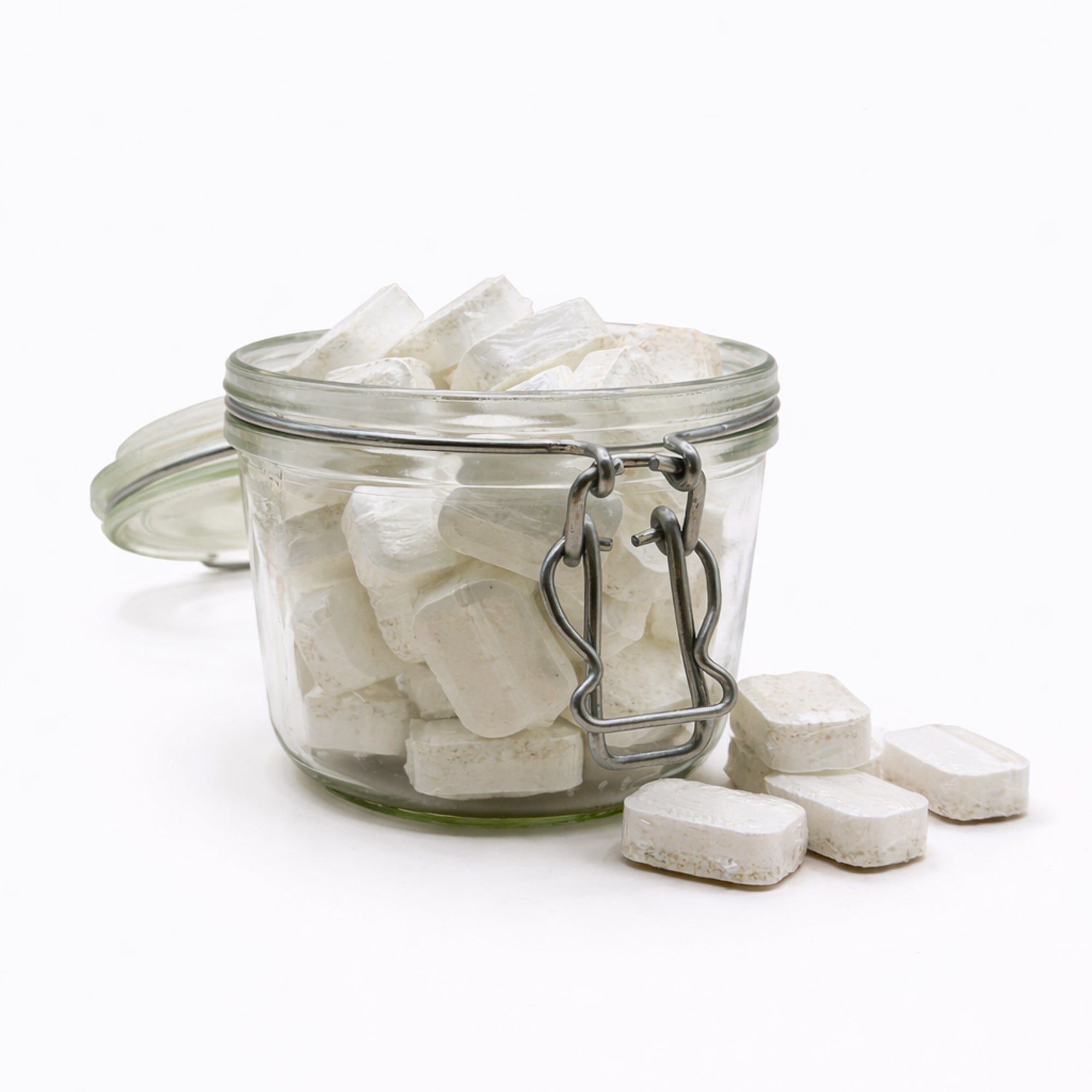
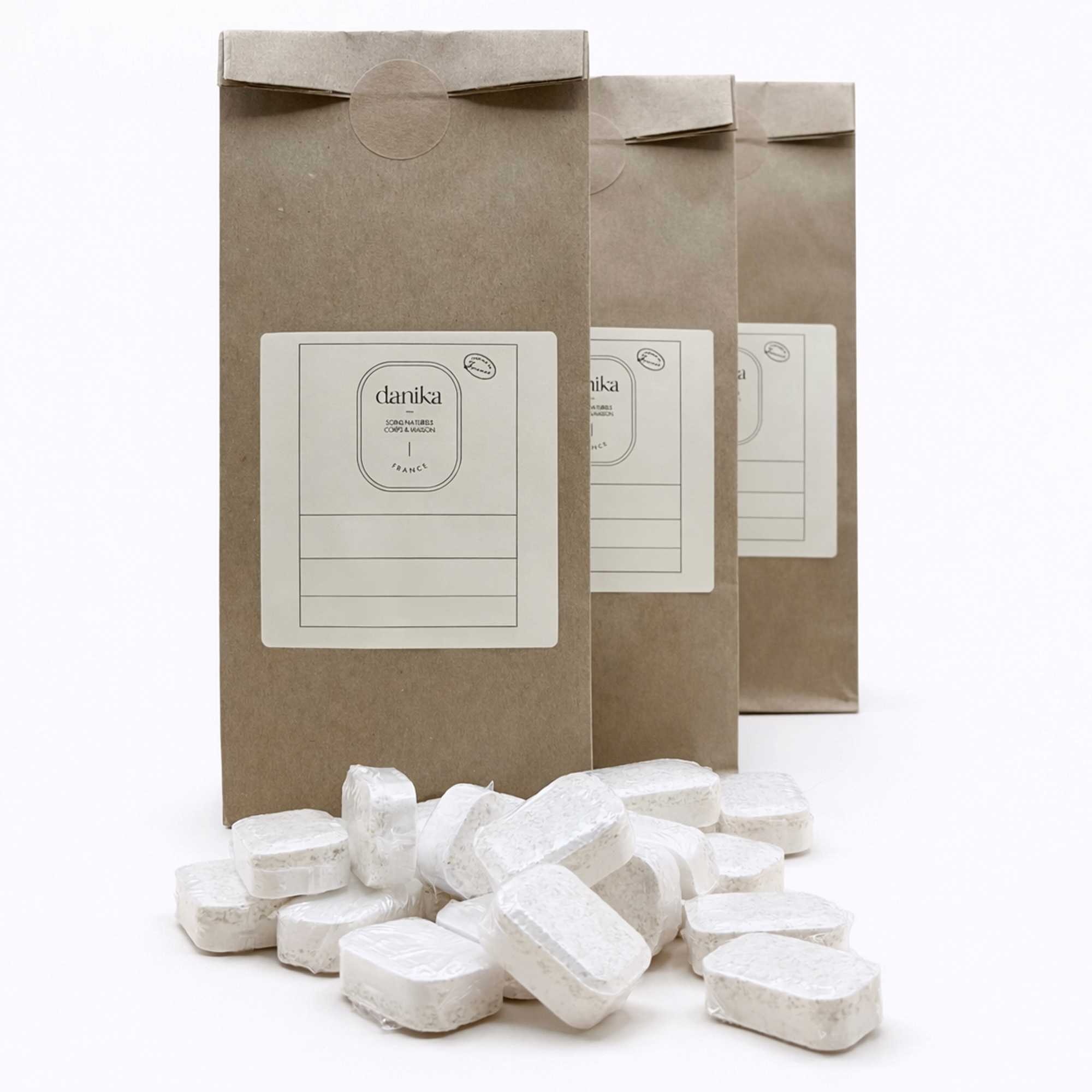
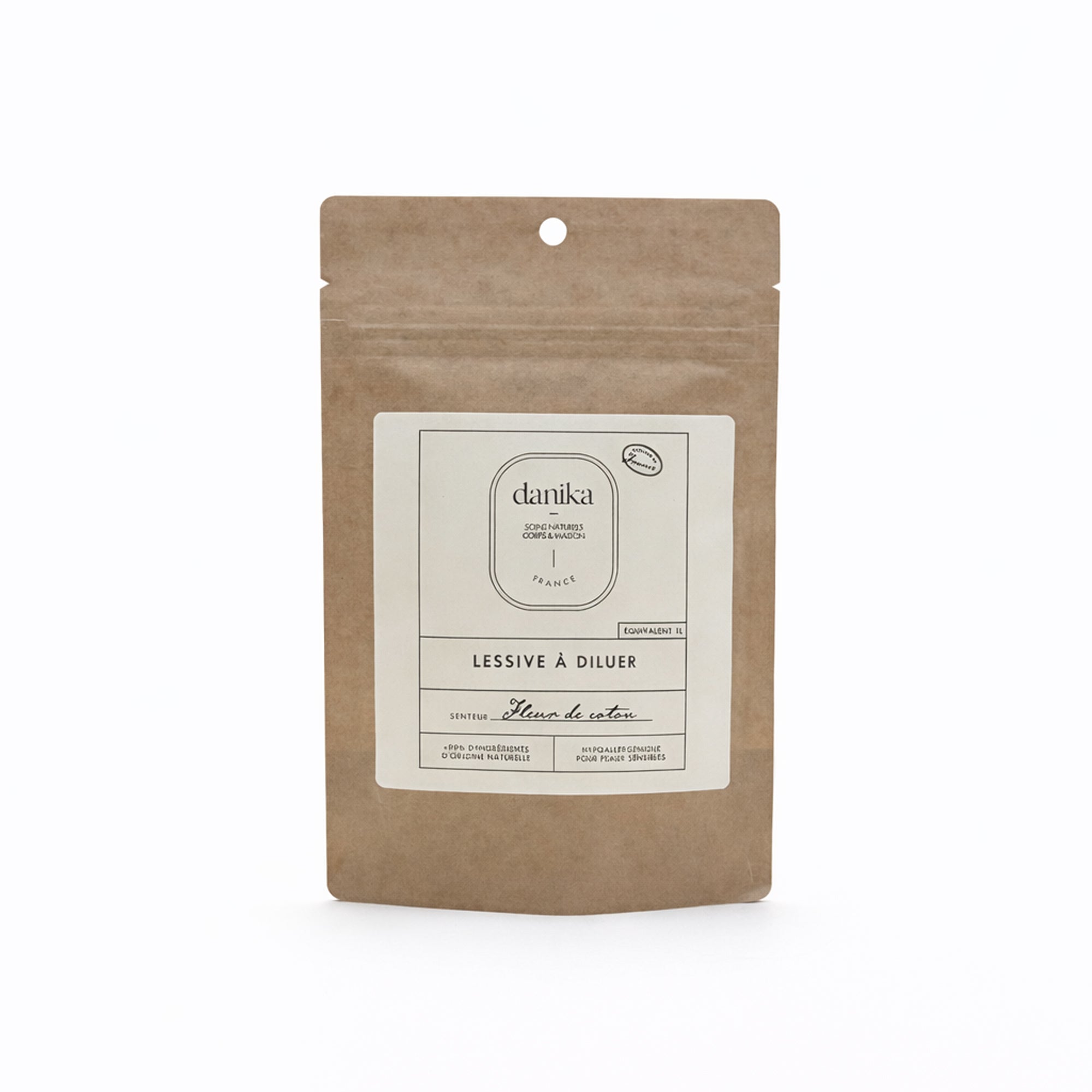
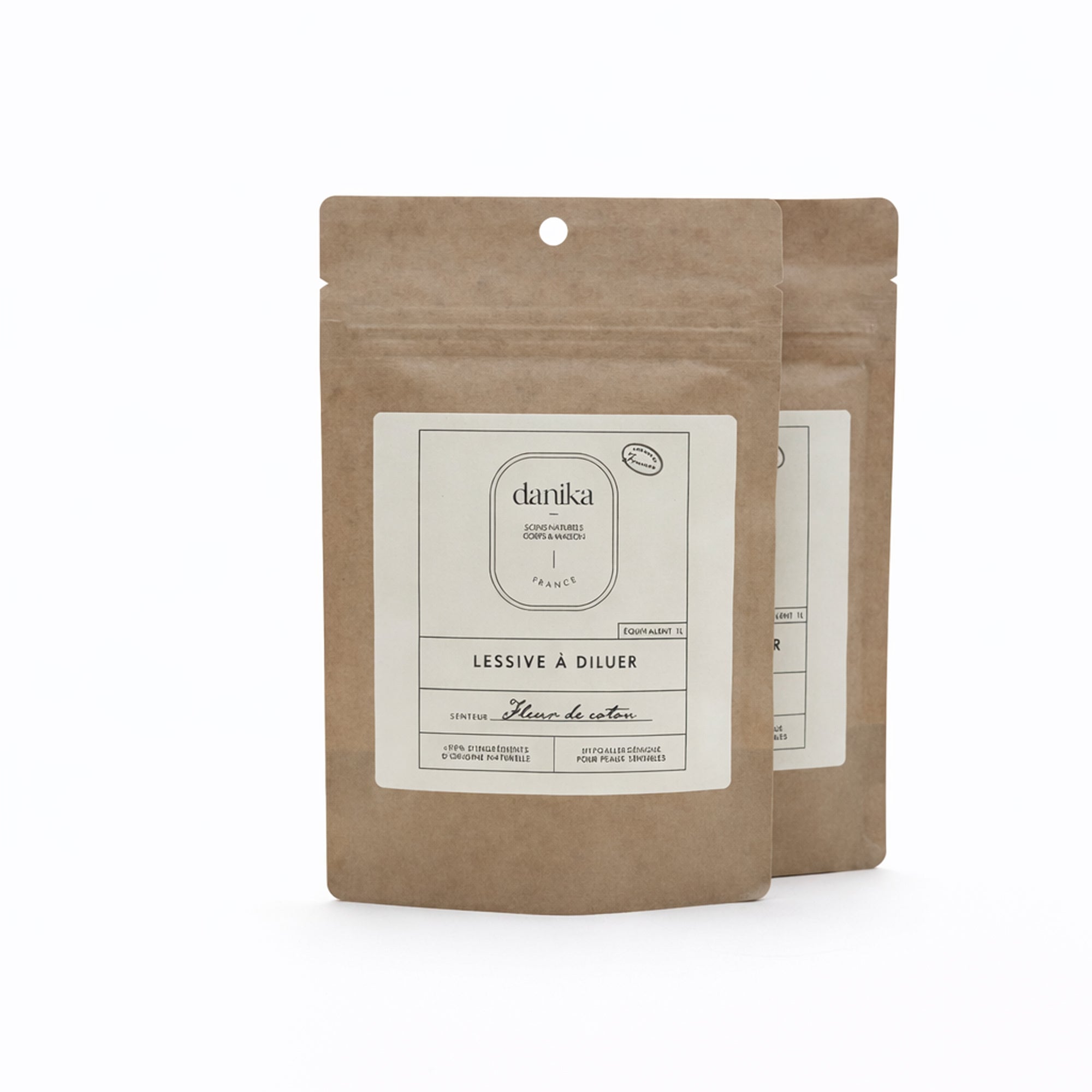
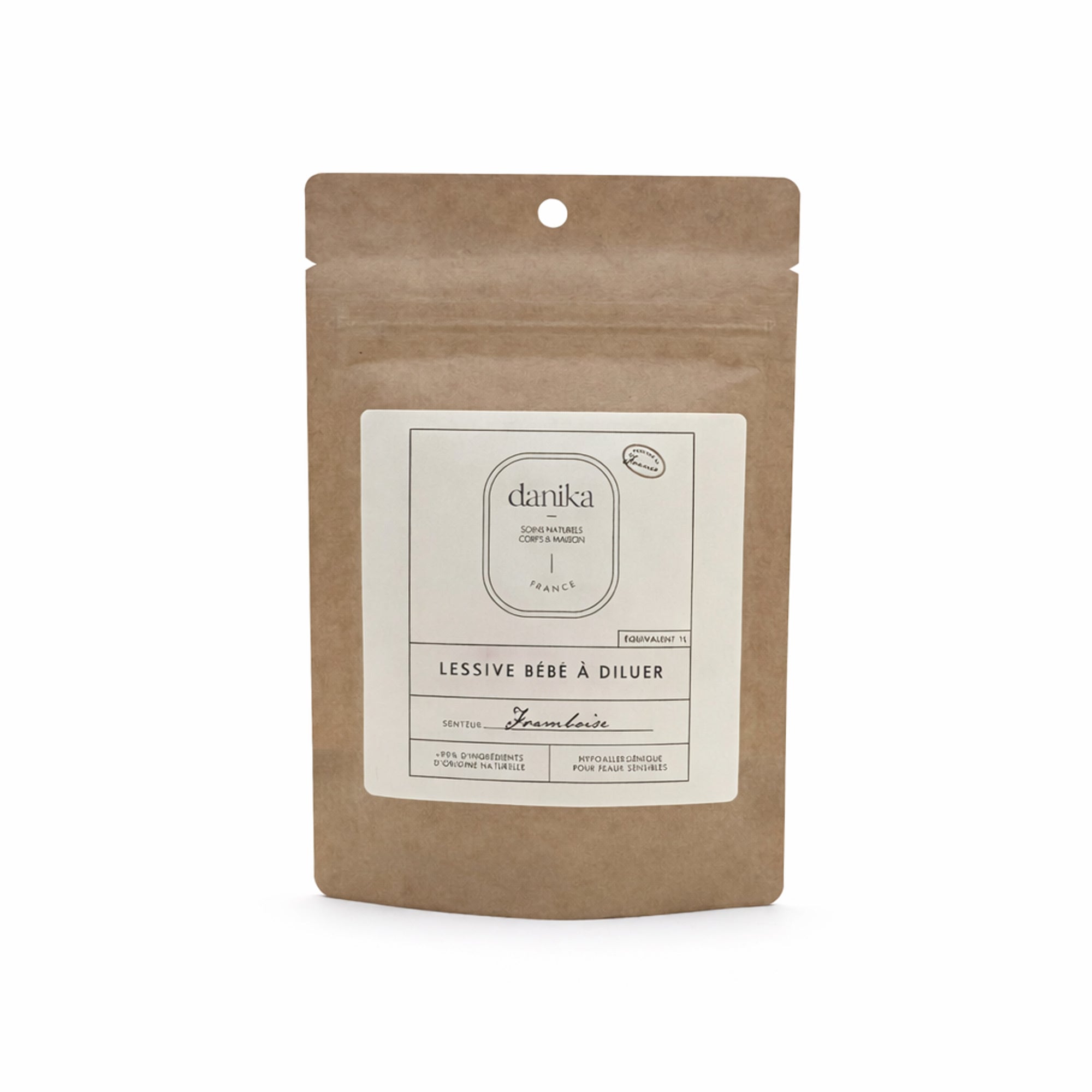
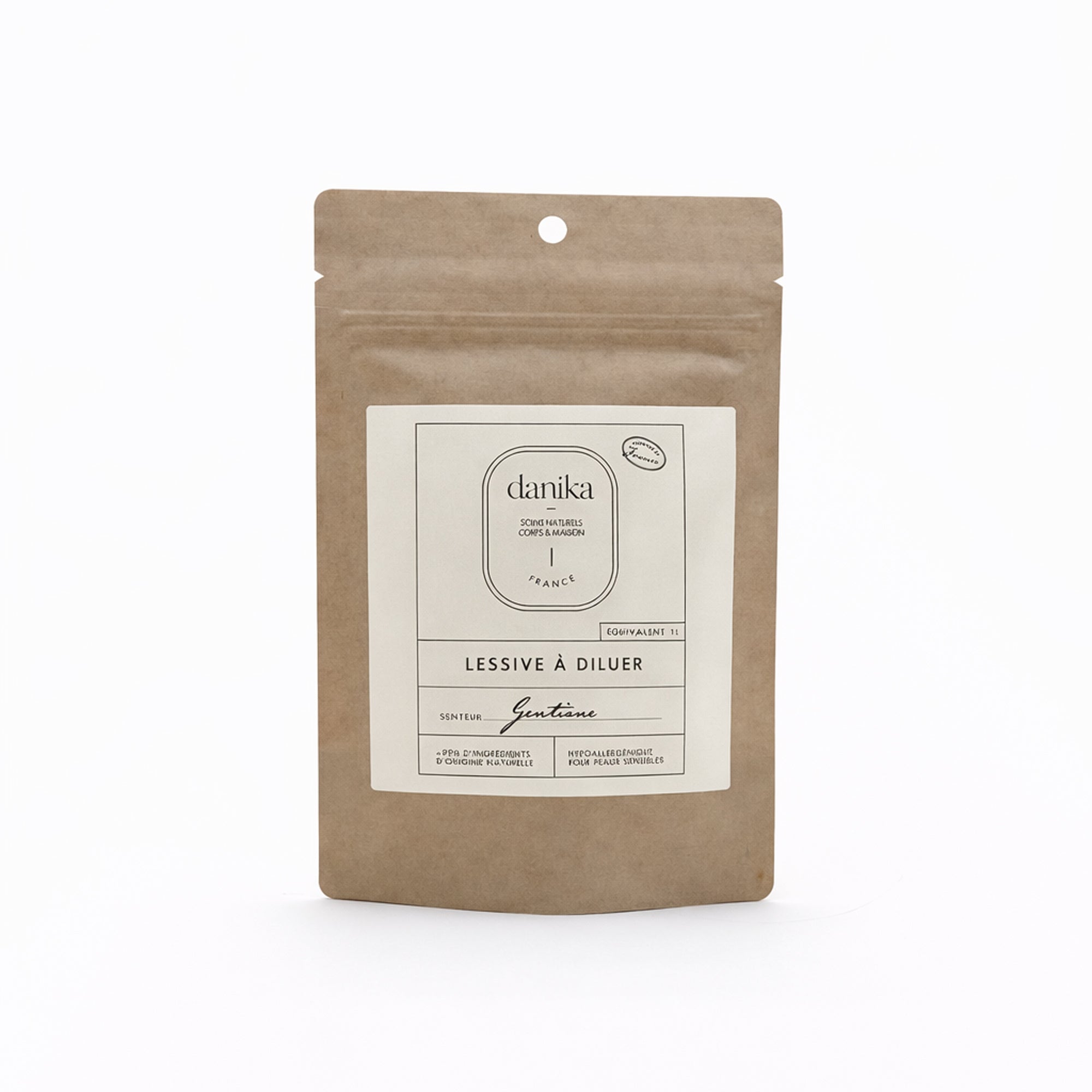
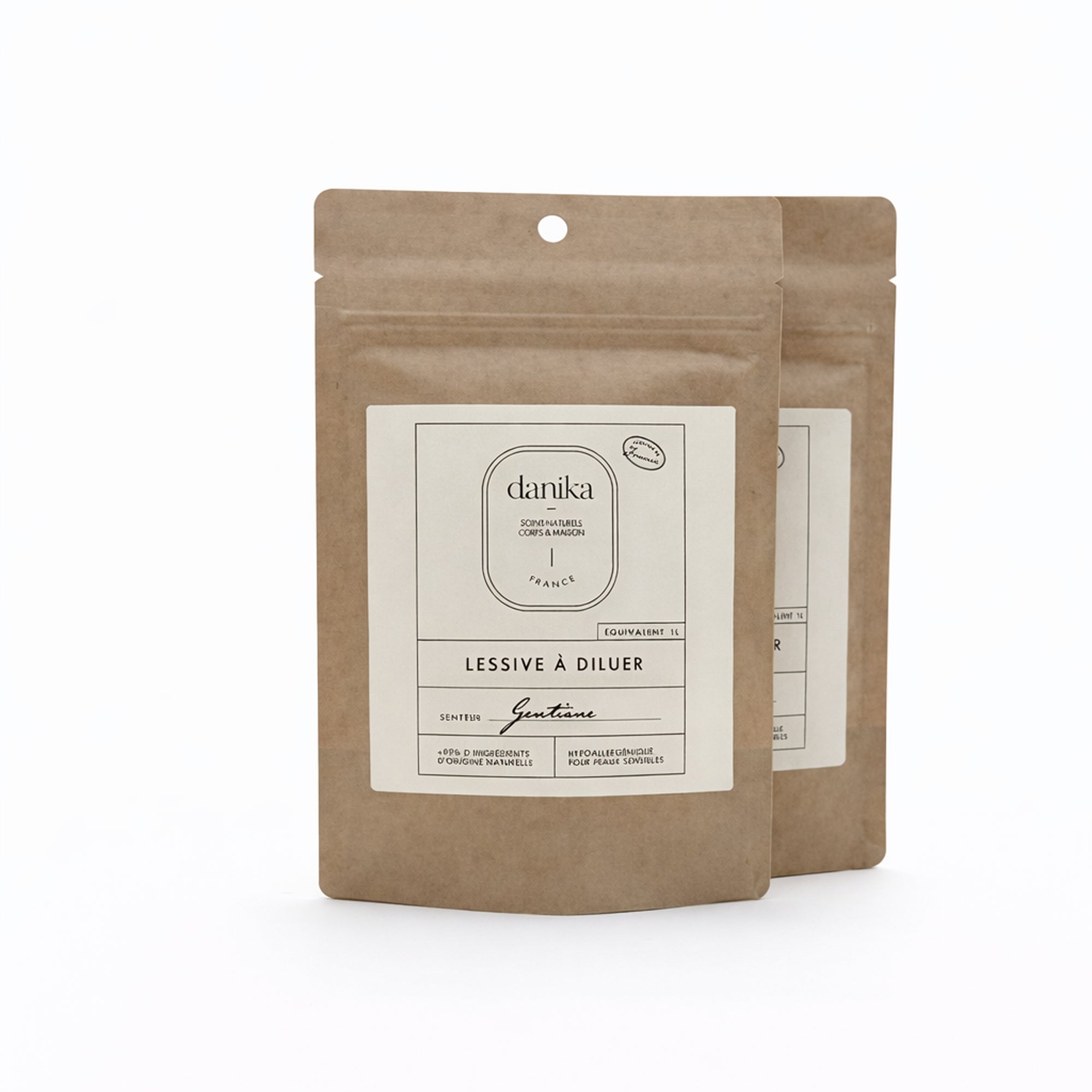
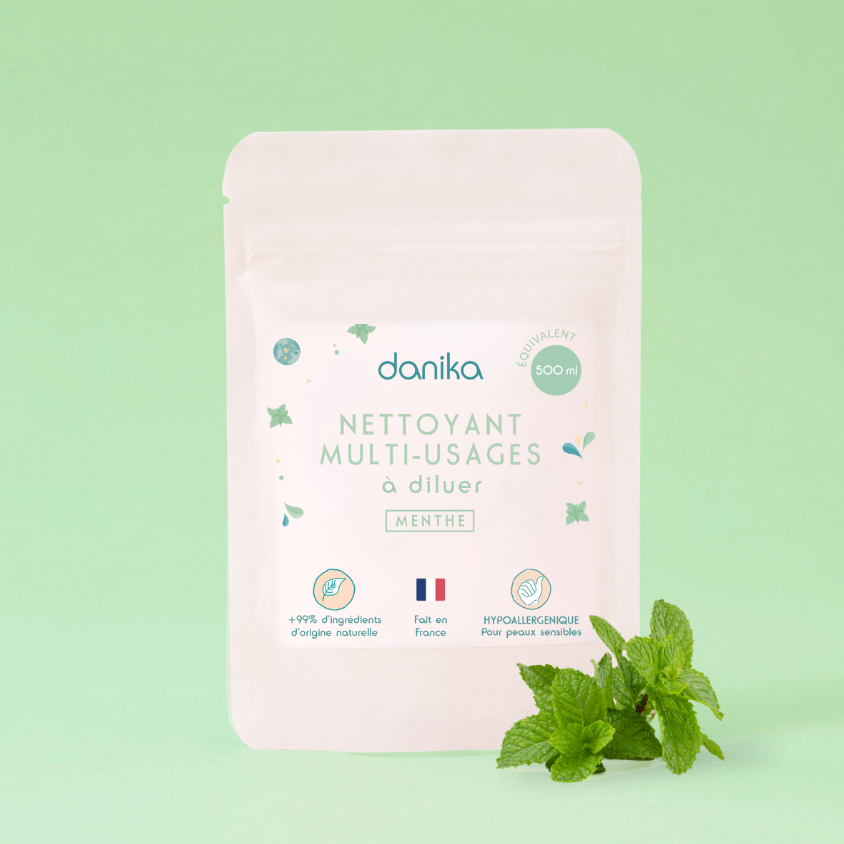
Some brands – like Danika – go even further with concentrated formats, made in France, with no transported water and no single-use plastic packaging. Fewer resources used, less waste, less transport… and a healthier product for the whole family.
An approach that brings back consistency where industrial detergent long added plastic and persistent molecules.
Good to know: Danika offers various detergents to make up at home, formulated with over 99% ingredients of natural origin.
2. Detergent formulated with natural ingredients is often gentler on the skin
A detergent never fully disappears in the wash. Some residue stays fixed to the textile fibres. This residue then comes into direct contact with the skin, sometimes for several hours.
In sensitive people, this can result in redness, itching or irritation. Babies, young children and people prone to eczema are particularly concerned, as their skin barrier is more reactive.
Conventional detergents can contain fragrances, dyes or certain preservatives likely to cause reactions in fragile skin. Natural detergents seek precisely to limit these components to offer simpler, better-tolerated formulas.
In this context, the 'hypoallergenic' claim can serve as a useful pointer, provided it rests on a genuine assessment of the formula and not on a mere marketing argument.
3. A natural-formula detergent is an interesting choice for health
When we talk about natural detergent, the issue isn't only environmental. It also concerns the way we expose ourselves, every day, to small amounts of substances via our clothes.
Textiles are in direct contact with the skin, sometimes for hours. Even after rinsing, some detergent residue stays fixed to the fibres. It's this residue that can come into prolonged contact with the epidermis.
Some conventional detergents contain synthetic fragrances, preservatives or bleaching agents that can be poorly tolerated by sensitive skin. Not to mention all the potentially irritating or allergenic ingredients present in certain formulations.
The benefit of a natural detergent is therefore to reduce this overall chemical load by simplifying the composition. Fewer unnecessary ingredients, fewer superfluous substances, and a formula designed to limit prolonged contact with harsh compounds.
It isn't a logic of fear, but a logic of reducing everyday exposure, especially for clothes worn next to the skin.
Note: the Gentian or Cotton Flower hypoallergenic detergents, as well as the hypoallergenic baby detergent offered by Danika are formulated without essential oils, with safe fragrances, to guarantee their safety.
4. Natural detergent is a solution for people prone to allergies
Skin irritations linked to clothes are more common than you'd think. They don't only come from the fabrics, but also from the residue left by cleaning products.
Some preservatives used in detergents, particularly the isothiazolinone families, are known for their sensitising potential. Synthetic fragrances can also trigger reactions in reactive or allergic people.
In this context, natural or simplified-formula detergents help reduce the presence of these problematic ingredients. They're particularly aimed at sensitive skin, babies, children, but also adults prone to eczema or repeated skin reactions.
The benefit isn't only to avoid allergies, but also to limit their appearance over time, by reducing repeated exposure to irritating substances.
That's also why the word 'hypoallergenic' takes on its full meaning when it rests on a genuine assessment of the formula, and not on a mere marketing argument.
5. Natural detergent is effective
One of the most ingrained ideas remains that a natural detergent would be less effective than a conventional one. This perception comes mainly from old formulations, now largely outdated.
Modern natural detergents rely on plant-based surfactants and enzyme systems capable of effectively breaking down everyday stains. They're designed to work on common dirt, without relying on an overload of chemical agents.
The difference therefore isn't in effectiveness, but in the composition and formulation logic. Where a conventional detergent may multiply additives, a natural detergent seeks to focus on the essentials while keeping a good level of performance.
In practice, this means the laundry is clean, while being treated with a simpler, more coherent formula for everyday use.
To remember
Natural detergent is an alternative designed to reduce environmental impact and limit the presence of certain potentially irritating ingredients found in conventional formulas.
It doesn't change the way you wash your laundry, but it can change the way your skin reacts day to day.
The key is to find a balance between effectiveness, simplicity of composition and skin tolerance, particularly for sensitive skin or clothes in direct contact with the skin.
FAQ
Is natural detergent really effective?
Yes, modern natural detergents are just as effective for everyday laundry. They use plant-based surfactants and effective washing agents that clean textiles well.
Is natural detergent better for the skin?
It's often better tolerated by sensitive skin as it limits certain ingredients such as strongly allergenic fragrances, dyes or certain preservatives. This doesn't guarantee the total absence of a reaction, but it reduces the risks.
Is a natural detergent necessarily safe?
No household product is completely neutral for all skin types. The benefit of a natural detergent is to offer a simpler formula that's better tolerated in most cases.
Can you use a natural detergent for baby's laundry?
Yes, provided you favour a baby detergent suited to sensitive skin and ideally certified hypoallergenic. As babies' skin is more fragile, the detergent's composition plays an important role.
Are natural detergent and hypoallergenic detergent the same thing?
No. A natural detergent is about the origin of the ingredients. A hypoallergenic detergent is about the irritant or allergenic potential of the formula. The two can overlap but aren't equivalent.
Does a natural detergent wash as well as an industrial one?
Today's natural formulas clean everyday laundry very well. They're suited to most textiles and remove dirt effectively, particularly when correctly dosed.
What sets a natural detergent apart from a conventional one?
The composition. A natural detergent contains few ingredients, chosen to be biodegradable and gentle on the skin. Conventional detergents use synthetic agents: fragrances, optical brighteners, non-biodegradable preservatives or water-soluble packaging that releases microplastics.
Are natural detergents suitable for sensitive skin?
Yes, that's even their main strength. They're generally better tolerated by atopic skin, eczema, babies or fragile people.
Are natural detergents really better for the environment?
They clearly reduce the ecological impact, as they contain no phosphates, optical brighteners or persistent preservatives. They also limit plastic waste, particularly when offered in a make-up-at-home format.
Best Sellers


Livraison gratuite dès 49€

Paiement sécurisé

Envoi rapide

Service client réactif