
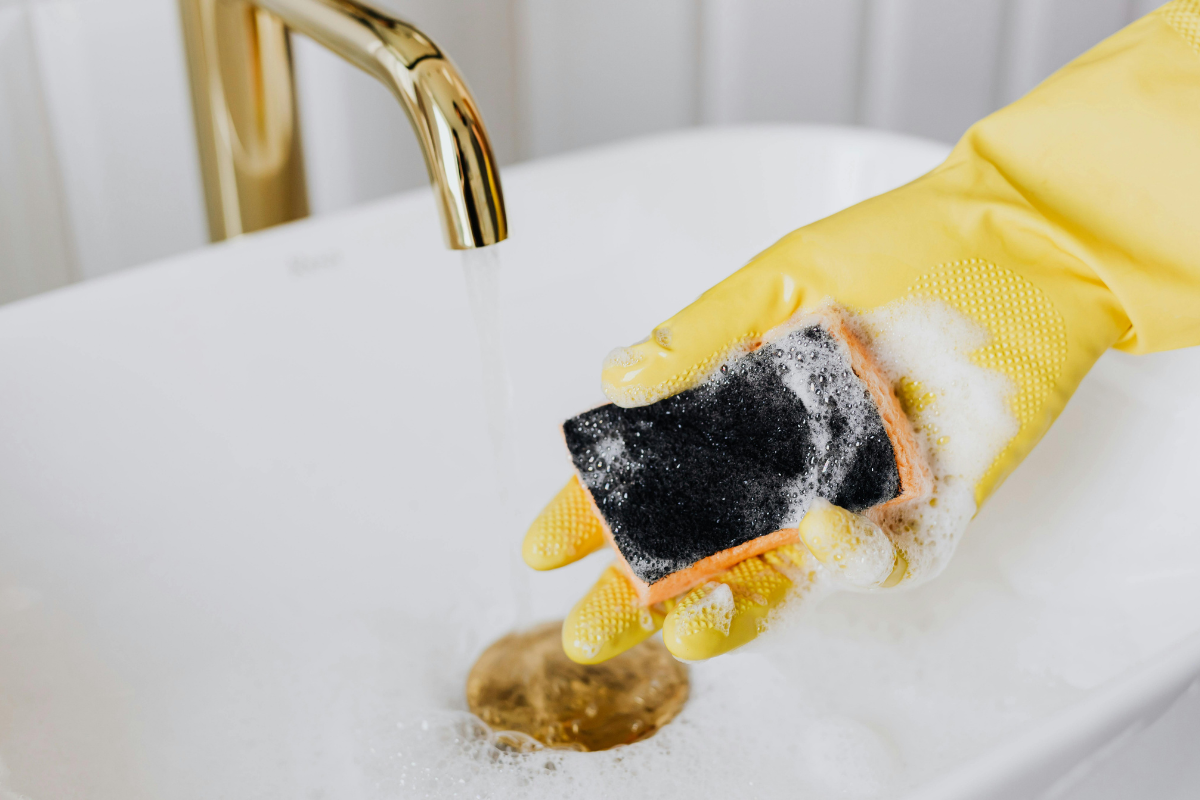
Have you ever wondered how many kitchen sponges you've thrown away in your lifetime? The question seems trivial, but it says a lot. On average, a person in France uses between 7 and 9 sponges a year. That adds up to dozens, sometimes hundreds of sponges thrown away over the years.
The classic yellow-and-green sponge is in almost every home. It seems essential, practical and cheap. Yet behind this apparent ordinariness lies an object that's far from neutral for the environment and sometimes even for home hygiene.
The synthetic sponge is polluting
The majority of conventional sponges are made from petrochemical materials. The yellow part is a petroleum-derived foam, while the green abrasive side is made of nylon and polyester. In other words: plastic in several forms.
These materials are neither compostable nor recyclable under standard conditions. Their manufacture relies on polluting industrial processes, and their end of life is a problem.
Even more worrying: during use, these sponges gradually break down and release micro-particles of plastic. These microplastics then end up in the wastewater, then in rivers and oceans.
The consequences are known: ingestion by marine organisms, contamination of the food chain, and finally a return to our own food. What's more, the plastic packaging that comes with them further worsens the product's overall impact.
The synthetic sponge is a nest for bacteria
The kitchen sponge is in constant contact with food residue, moisture and various surfaces. The result: it quickly becomes an environment favourable to bacterial growth.
Studies have shown that a sponge can contain millions of bacteria in just a few days. Some areas are particularly contaminated, especially when the sponge stays damp between uses.
Contrary to a common belief, disinfection isn't always enough, and even methods such as the microwave or hot water don't fully eliminate the bacteria.
The synthetic sponge can pose a hygiene risk
The sponge doesn't just stay on the worktop. It comes into contact with kitchen surfaces, dishes, hands and sometimes food.
In the event of bacterial growth, it can encourage the spread of micro-organisms throughout the kitchen. In certain conditions, this can be a problem, particularly for the most vulnerable or immunocompromised people.
It isn't the sponge itself that's dangerous, but its prolonged use in a damp environment without regular renewal.
The classic sponge also poses a broader environmental problem
Beyond the kitchen, the sponge is part of a wider problem: that of short-use plastics.
Produced, used for a few weeks, then thrown away, it joins the mass of unrecycled waste. Its slow breakdown contributes to the pollution of soils and oceans, with lasting consequences for ecosystems.
Which alternative to choose? The washable eco-friendly sponge
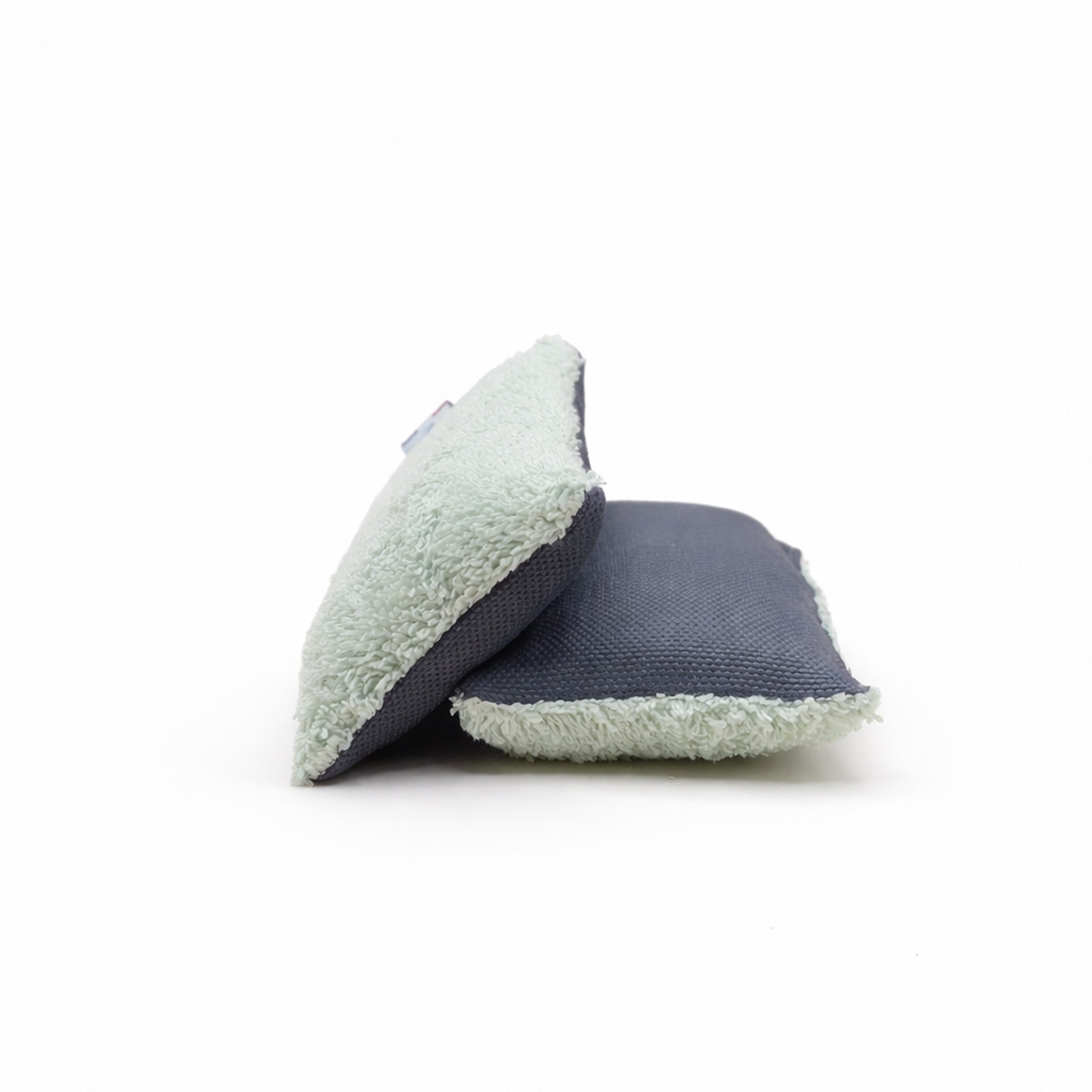
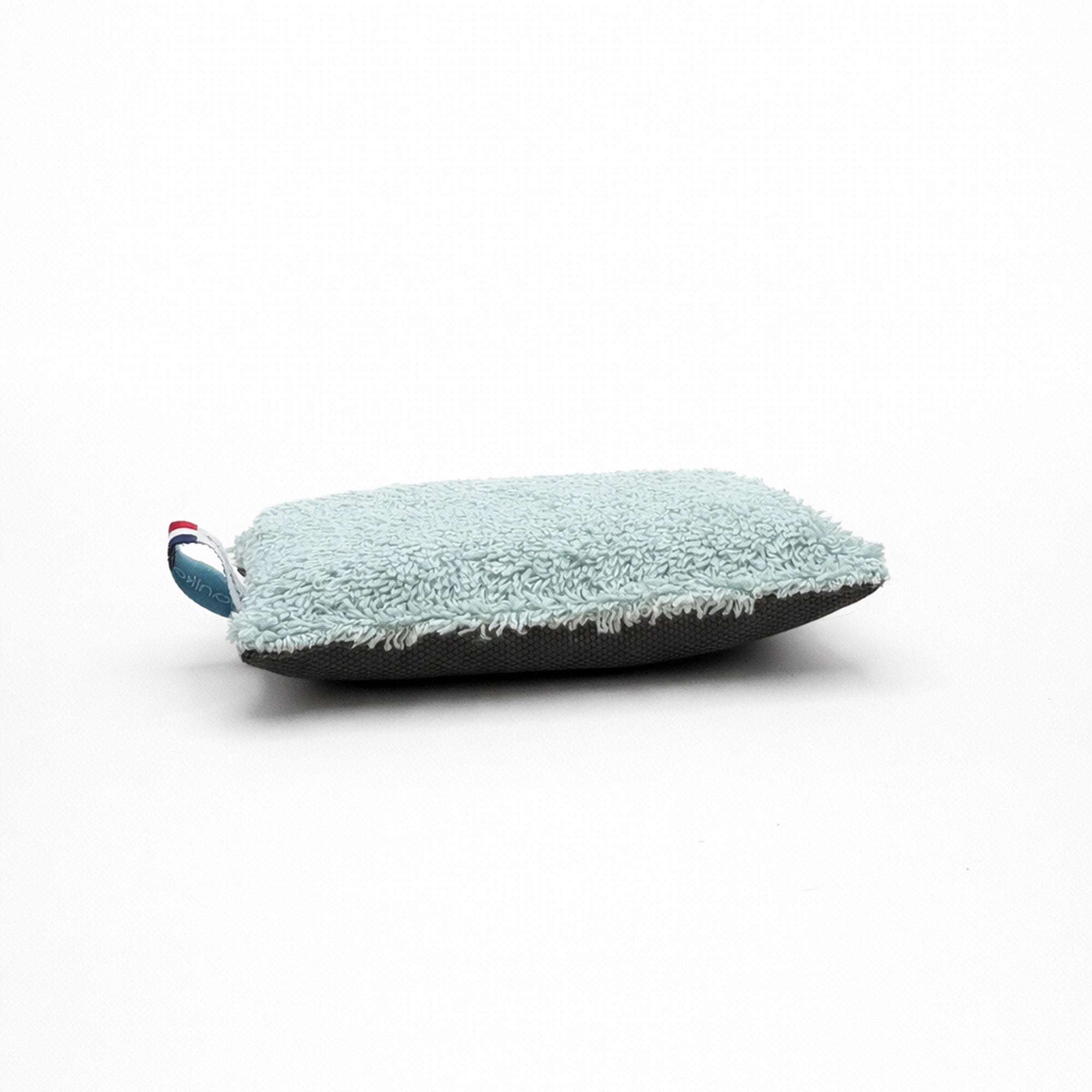
Faced with these observations, an alternative exists: the washable eco-friendly sponge.
Unlike a conventional sponge, it's made from more durable materials, often textiles, and reusable over a long period.
It can be washed, reused and cared for easily, which considerably reduces waste production.
How do you recognise a genuine eco-friendly sponge?
Not all so-called 'eco-friendly' sponges are equal.
To make the right choice, several criteria are essential:
-
natural or recycled materials
-
no plastic or petrochemical foam
-
the possibility of machine or hand washing
-
a lifespan of more than several months
-
responsible, sustainable manufacture
A genuine eco-friendly sponge should above all reduce its overall impact, not just change its name.
The washable eco-friendly sponge is kinder to the environment
Made from natural materials or durable textiles, the washable sponge doesn't release microplastics into the environment.
It can be compostable or biodegradable depending on the model and doesn't generate the same waste as a conventional sponge. It therefore fits into a logic of reducing waste and more responsible consumption.
A much longer lifespan
A washable eco-friendly sponge can last several months, or even over a year depending on its use and care. Unlike a conventional sponge, it doesn't need replacing every week.
This durability reduces both waste and consumption over the long term.
How do you care for a washable sponge?
Caring for it is simple:
-
rinse after use
-
regular washing by hand (with a little Danika washing-up liquid) or in the machine at 30°C (with Danika laundry detergent)
-
air drying
It's advisable to avoid fabric softeners to preserve its absorbent properties.
An economical alternative
Even if its initial price may be slightly higher, the washable sponge pays off over time. A single sponge can replace several dozen disposable sponges.
To remember
The conventional sponge poses three main problems:
-
plastic and microplastic pollution
-
rapid build-up of bacteria
-
high environmental impact
The washable eco-friendly sponge offers a more durable, more economical and more responsible alternative.
Changing your sponge may seem trivial. Yet it's a simple action that has a concrete impact on reducing plastic waste and on everyday hygiene.
FAQ
Why should you regularly change a conventional sponge?
A conventional sponge holds moisture and food residue, which encourages bacteria to grow. In just a few days, it can become a real microbial reservoir. That's why frequent replacement is recommended.
Is a conventional sponge dangerous for health?
It isn't dangerous in itself, but its prolonged use can pose a hygiene problem. Bacteria can grow quickly and spread onto kitchen surfaces if the sponge isn't properly cared for or replaced.
Why is the conventional sponge polluting?
It's mostly made of plastic (petroleum-derived foam, nylon, polyester). It isn't recyclable and releases microplastics during use and breakdown, which contributes to the pollution of oceans and soils.
What is a washable eco-friendly sponge?
It's a reusable alternative made from more durable materials, often textile or natural. It can be washed and reused for several months, which reduces waste and the consumption of disposable sponges.
Is a washable sponge really more hygienic?
Yes, provided it's properly cared for. It should be washed regularly (by hand or in the machine) and dried well after use. Unlike a conventional sponge, it doesn't stay constantly damp, which limits bacterial growth.
How long does a durable sponge last?
Depending on its use and care, it can last from several months to over a year. That's one of its main advantages over disposable sponges.
Is the washable sponge really economical?
Yes. Even if its purchase price is higher, it replaces several dozen conventional sponges. Over a year, it therefore reduces cleaning-related spending.
How do you care for a washable sponge properly?
It's advisable to rinse it after each use, wash it regularly at 30°C and leave it to air dry. Using fabric softener should be avoided to preserve its absorbency.
What's the best alternative to the conventional sponge?
The washable responsible sponge is today one of the simplest and most effective alternatives. It combines durability, waste reduction and better control of everyday hygiene.
Can you completely replace disposable sponges?
Yes, for most household uses. The washable sponge is enough for the dishes, surfaces and kitchen upkeep, while greatly reducing plastic waste.
Best Sellers


Livraison gratuite dès 49€

Paiement sécurisé

Envoi rapide

Service client réactif