
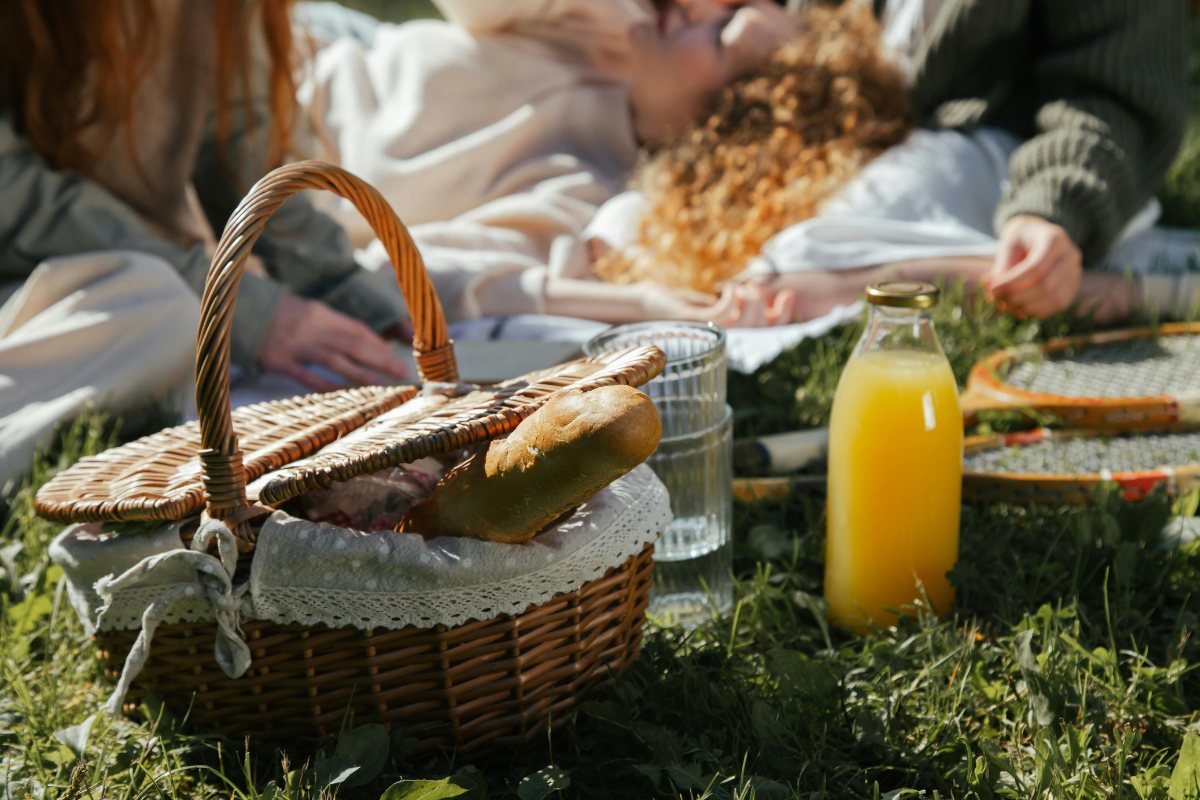
The warmer days are back, and with them the urge for outdoor meals. The picnic is one of those simple, sociable moments, but also often a big waste generator.
Preparing transport: planning ahead to avoid disposables
A zero-waste picnic starts well before you arrive. The choice of container plays a key role. A reusable cool box or cool bag lets you carry food without resorting to plastic bags or disposable packaging. Natural-fibre baskets or sturdy everyday bags can also do the job very well.
Drinks: replacing disposable bottles
Drinks are often a major source of plastic at picnics. Replacing them with a water bottle or flask immediately changes the amount of waste produced.
Stainless steel remains a durable, sturdy option, while glass can suit calmer settings. The key is to avoid single-use bottles, which systematically end up in the bin after a few hours' use.
Reusable tableware: back to simple items
Disposable plates and cutlery are handy in the moment, but they make up a large part of a classic picnic's waste.
Using the tableware from home remains the simplest option. For more mobility, some choose reusable alternatives in wood or durable materials, easy to carry and then wash.
This change doesn't necessarily require new purchases: it rests above all on organisation.
Napkins and wrapping: replacing the all-disposable
Paper napkins, cling film or foil are deeply ingrained habits. Yet they can easily be replaced.
A fabric napkin can be used both to wipe your hands and to wrap a snack. For food, airtight boxes, glass jars or reusable wraps let you carry a complete meal without generating unnecessary waste.
Putting together a simple, packaging-free menu
A zero-waste picnic also comes down to what's on the plate. Packaged processed products multiply waste with no real added value.
Preparing simple dishes in advance greatly reduces packaging: mixed salads, quiches, cut vegetables, fresh fruit or homemade desserts. The aim isn't to complicate the preparation, but to favour foods that are easy to carry and share.
Managing leftovers and avoiding waste
A well-thought-out picnic also anticipates leftovers. Bringing one or two extra containers makes it easy to take home what hasn't been eaten.
Organic waste, such as peelings, can go to compost where possible. The general idea stays the same: nothing should be left behind or thrown into the overflowing bins of public places.
Adapting your picnic to the chosen spot (park, beach, forest, etc.)
A zero-waste picnic isn't prepared the same way depending on where it takes place. The setting directly influences the organisation, the kit to bring and how to manage waste.
In an urban park, some amenities often remain available: water points, bins, set-up tables. This can give an impression of ease, but it's still important not to depend entirely on the infrastructure. It can be full, far away or non-existent depending on how busy it is.
In a forest or out in nature, the logic changes completely. There's no collection point or access to drinking water. Everything must therefore be anticipated in advance, both for meals and for cleaning up and storing waste. Every item brought must be able to be kept and taken back without difficulty.
At the seaside or on a beach, other constraints appear: sand, wind, humidity. Containers must be well sealed, stable and easy to protect. Light waste, such as napkins or wrapping, must be watched particularly closely to stop it blowing away.
In every case, the rule stays the same: nothing should be left behind. That means planning a dedicated bag for waste, even minimal amounts, and adopting kit that's compact, reusable and easy to carry. The aim isn't to overdo it, but to be self-sufficient from start to finish of the picnic.
Reducing food waste too
A zero-waste picnic isn't limited to packaging or tableware: it also starts with the preparation of food. Food waste is often invisible in the moment, but it weighs just as much in the meal's overall impact.
One of the first habits is to adjust quantities. Preparing too much 'just in case' often leads to leftovers that end up forgotten or thrown away. Conversely, portions planned around the number of guests naturally help limit excess.
The choice of food also plays a key role. Some products keep better and easily withstand transport without prolonged refrigeration: raw vegetables, seasonal fruit, simple preparations or hardy dishes. This avoids losses linked to heat or transport.
Finally, thinking in terms of 'multi-use' can change how you put together a menu. The same ingredient can serve in several dishes: a vegetable base can go into a salad, a quiche or a side. This logic reduces unnecessary purchases and simplifies organisation while limiting waste.
In summary
A zero-waste picnic rests on a few simple principles: favouring reusables, limiting disposable packaging, preparing homemade meals and anticipating how to manage leftovers.
With these habits, it becomes possible to enjoy time outdoors while greatly reducing your environmental impact, without radically changing your ways.
FAQ
How do you organise a zero-waste picnic?
Just plan ahead: use reusable containers, prepare homemade dishes and avoid disposable packaging right from the preparation stage.
What tableware should you use for a zero-waste picnic?
The reusable tableware from home is ideal. Otherwise, durable alternatives such as wood or stainless steel can be used.
How do you replace plastic bottles?
Water bottles and flasks let you carry all your drinks without generating waste.
What do you do with leftovers after a picnic?
Leftovers can be kept in reusable boxes and taken home. Organic waste can go to compost if possible.
Is a zero-waste picnic complicated to organise?
No, it rests above all on simple habits and better anticipation of needs.
Best Sellers

Livraison gratuite dès 49€
Paiement sécurisé

Envoi rapide

Service client réactif