

Did you know? A detergent doesn't just clean your clothes. It stays in contact with the fibres, and therefore with your skin. When you consider that a household does several washes a week on average, the composition of this everyday product is no longer a detail. Wondering what a hypoallergenic detergent is and how it differs from a conventional one? Here are the essentials.
Hypoallergenic detergent vs industrial detergent: issues for health and the environment
Industrial detergent is so much a part of our habits that we often forget its composition. Yet some formulas can raise health and environmental questions.
During washing, some of the substances in detergents are discharged into wastewater and, even after treatment, not all are fully removed by treatment plants. Some waste can then reach rivers, soils and aquatic environments.
For a single household, the impact is limited, but when you add up the millions of wash cycles carried out every day, worldwide, the cumulative effect becomes significant for ecosystems.
Diffuse pollution in aquatic environments
Conventional detergents can contain different types of ingredients such as surfactants, synthetic fragrances, preservatives or bleaching agents.
Some of these substances are poorly biodegradable and persist in the environment. They then contribute to the gradual deterioration of water quality and disrupt certain natural balances.
This type of pollution is particular, because it's diffuse and continuous. It doesn't come from a single source, but from thousands of small everyday uses.
Possible effects on health
Beyond the environmental impact, some detergents can contain irritating or allergenic substances.
These components partly remain on textiles after washing and then come into direct contact with the skin. In some cases, this causes irritation, redness or itching.
The most sensitive skin is particularly concerned: babies, children, atopic skin or people prone to eczema, but these reactions can affect anyone.
Some formulations also contain substances suspected of being endocrine disruptors. These compounds are being studied, as they could interact with the hormonal system, even at low doses.
Without being dramatic, this highlights the value of paying attention to the composition of the products we use every day, especially when they're in direct contact with the skin.
What is a hypoallergenic detergent?
A hypoallergenic detergent is a detergent formulated to minimise the risk of allergic reactions.
This doesn't mean it's completely free of allergens, but that their presence is limited and governed by strict regulatory thresholds.
A detergent can't claim to be hypoallergenic without prior assessment.
In most cases, the formula is analysed by an independent expert. They study the composition, identify the allergenic substances present and check their concentrations. These results are then compared with the thresholds set by current regulations.
If the formula meets these thresholds, it's classed as hypoallergenic.
Who is hypoallergenic detergent for?
Hypoallergenic detergent is above all for people who want to limit the risk of skin reactions linked to laundry.
It's particularly used for babies and young children, whose skin is still developing and more permeable to external substances. It's also often chosen by people prone to eczema, redness or itching, but it doesn't only concern atopic skin. It can also appeal to those who simply want to reduce everyday exposure to certain potentially irritating substances found in household products.
In reality, there's no single typical profile. It's mainly a question of skin comfort, prevention and personal preference for simpler, cleaner formulas.
Hypoallergenic detergent and natural detergent: a common confusion
The two are often confused, yet these ideas don't rest on the same criteria.
-
A natural detergent depends above all on the origin of the ingredients.
-
A hypoallergenic detergent depends on its irritant or allergenic potential.
Natural therefore doesn't necessarily mean gentle on the skin, and hypoallergenic doesn't automatically mean natural. So a natural formula can contain ingredients likely to irritate the skin, while a hypoallergenic detergent can include certain synthetic components.
What's the difference between a conventional detergent and a hypoallergenic one?
Conventional detergent and hypoallergenic detergent have the same use: cleaning laundry. Yet their formulation logic isn't the same.
A conventional detergent is generally designed to perform on a wide spectrum of stains and textiles. It can contain fragrances, bleaching agents, preservatives or additives intended to reinforce the smell or the wash effectiveness. These ingredients aren't necessarily a problem in everyday use, but some can be more irritating for sensitive skin.
Hypoallergenic detergent, for its part, doesn't seek to add everything, but rather to limit what can cause problems. Its formulation is designed to minimise the presence of substances known to be allergenic or irritating. The idea isn't to remove every possible reaction, but to reduce the risks in the most sensitive people.
In short, the difference isn't in the washing function, but in the composition and the level of skin tolerance sought.
Which ingredients should you avoid in a conventional detergent?
Not all detergents contain the same ingredients. Some substances are regularly singled out for their irritant potential or their environmental impact.
Among the elements, we can mention:
-
Synthetic fragrances. They're used to give laundry a 'fresh' smell, but they're also among the leading causes of skin sensitisation in some people.
-
Preservatives, such as certain isothiazolinone families, are present in several liquid formulas. They serve to prevent bacteria growing in the product, but can be poorly tolerated by reactive skin.
-
Dyes, which have no use for washing itself.
-
Bleaching agents and additives intended to improve the appearance of the laundry.
-
Certain complexing or stabilising agents can be poorly biodegradable and raise environmental questions.
The point isn't to demonise ingredients, but to understand their role and make more informed choices, especially when the laundry is in direct contact with the skin.
How do you choose a hypoallergenic detergent well? (mistakes to avoid)
Choosing a hypoallergenic detergent isn't just about reading a claim on packaging.
The first instinct is to check the simplicity of the composition. A short, readable list is often a good indicator. Conversely, a very long formula, full of hard-to-identify additives, deserves more caution.
It's also important to distinguish marketing claims from genuine commitments. A claim like 'dermatologically tested' doesn't necessarily mean the formula is hypoallergenic in the strict sense. Likewise, a fragrance presented as 'gentle' can still contain allergenic substances.
Another often-overlooked point: whether or not there's an independent assessment. When a detergent is genuinely designed for sensitive skin, it's usually formulated with precise, verifiable criteria.
Finally, a common mistake is to think 'hypoallergenic' means 'zero risk'. In reality, it's mainly a reduction of the allergenic potential, not an absolute guarantee.
To remember
A hypoallergenic detergent is above all a detergent designed to limit everyday skin reactions.
It's for anyone who wants laundry that's gentler on the skin — whether out of necessity (eczema, redness) or by choice to limit everyday exposure to certain substances.
A hypoallergenic detergent isn't a 'separate' detergent: it washes like a conventional one, but with a composition designed to limit irritation and skin reactions.
It favours short formulas, avoids overly heavy fragrances and reduces the presence of allergens.
It rests on a governed formulation, tested and optimised to better tolerate contact with the skin. It doesn't change your washing habits, but it can change the way your skin reacts day to day.
To go further: laundry care, our advice.
FAQ - Hypoallergenic detergent
Is a hypoallergenic detergent safe?
No detergent can guarantee the total absence of a reaction. However, a hypoallergenic detergent is specifically formulated to reduce the risk of irritation or skin sensitisation. The allergen thresholds are checked, analysed and validated before the claim can be used.
Is it suitable for babies?
Yes, that's even one of the main uses. Babies' skin is thinner, more permeable and reacts more easily to residue left on laundry. Many parents therefore favour this type of detergent, especially for the first few months.
Does hypoallergenic mean fragrance-free?
Not necessarily. Some detergents contain fragrance, but the fragrances used are chosen for their low allergenic potential. Other formulas are completely fragrance-free for very sensitive people.
Can you use a hypoallergenic detergent to wash the whole family's clothes?
Absolutely. It isn't a 'medical' detergent, just a gentler formula.
It suits all skin types, even those with no particular sensitivity.
Is a hypoallergenic detergent as effective as a conventional one?
Wash effectiveness depends on the cleaning agents, not on being hypoallergenic. A detergent can be gentle on the skin and effective on everyday stains.
Should you rinse laundry more with a hypoallergenic detergent?
A standard cycle is enough, but for people prone to irritation, favouring an 'extra water' rinse or a long cycle can further improve tolerance.
Is a hypoallergenic detergent necessarily natural?
Hypoallergenic means the formula limits the risk of allergies. Natural simply describes the origin of the ingredients. A detergent can therefore be natural but irritating, or hypoallergenic with a few very well-tolerated synthetic components. The two ideas aren't the same: only the actual composition allows a judgement.
Is a hypoallergenic detergent better for the environment?
Not automatically. It focuses on the skin, not on the ecological impact.
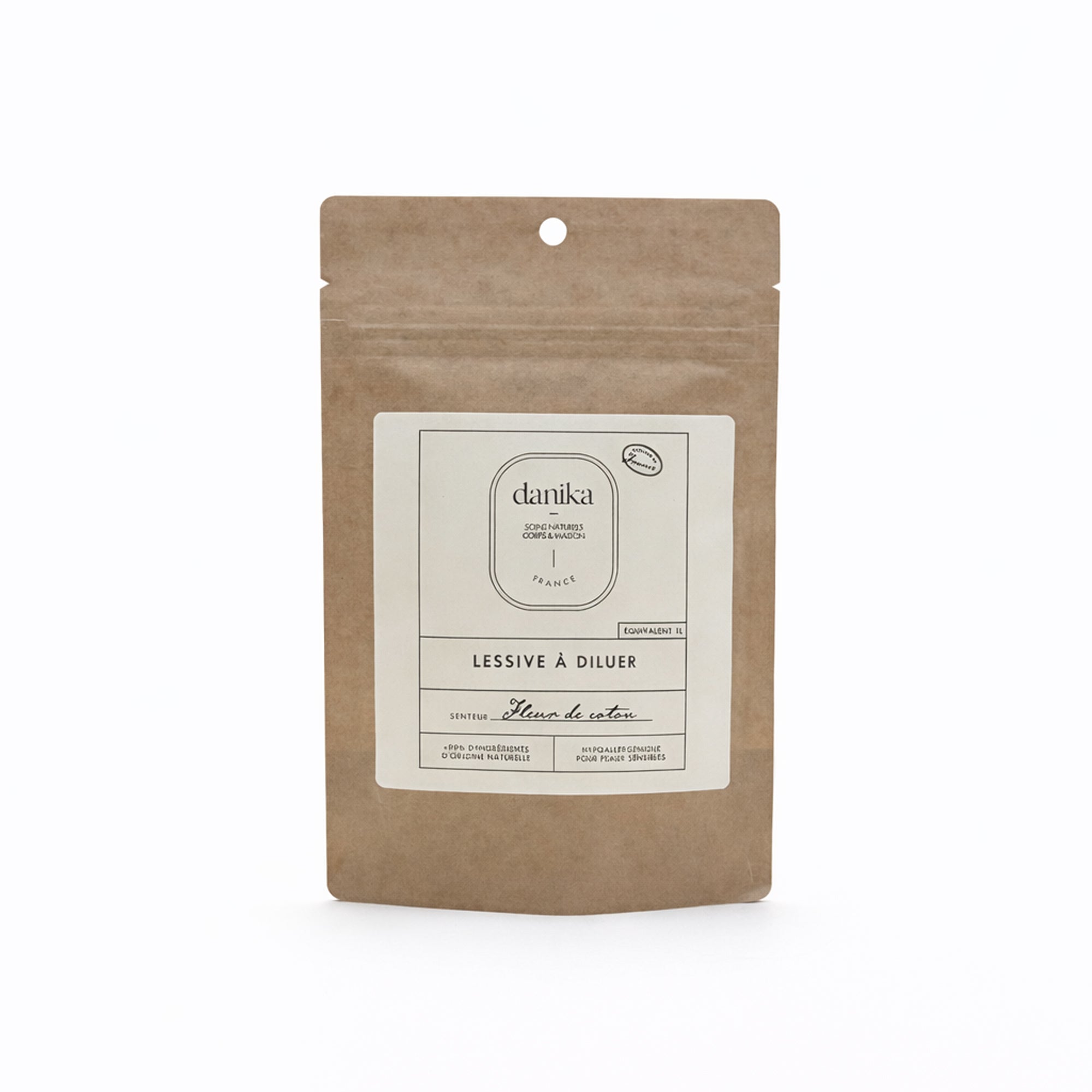
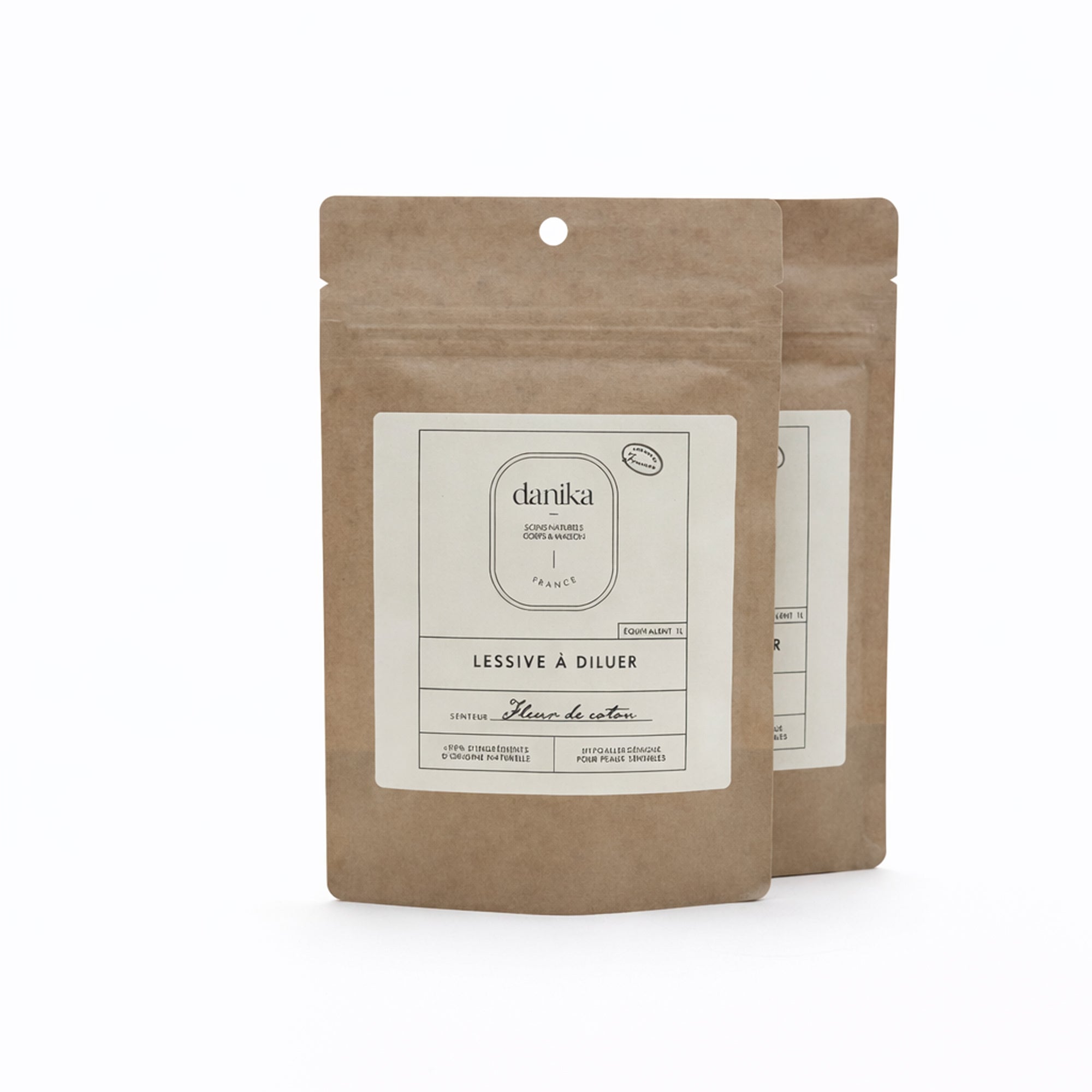
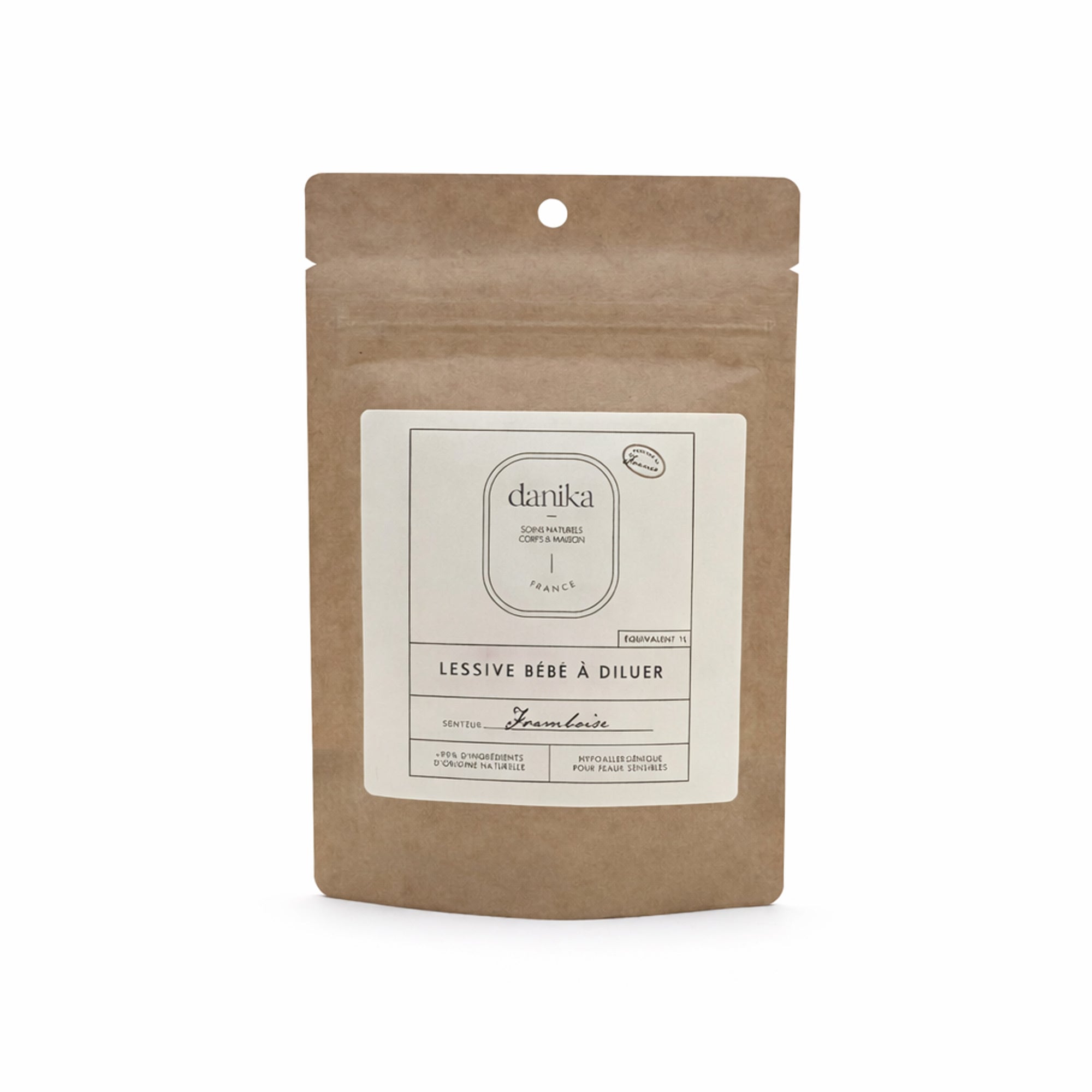
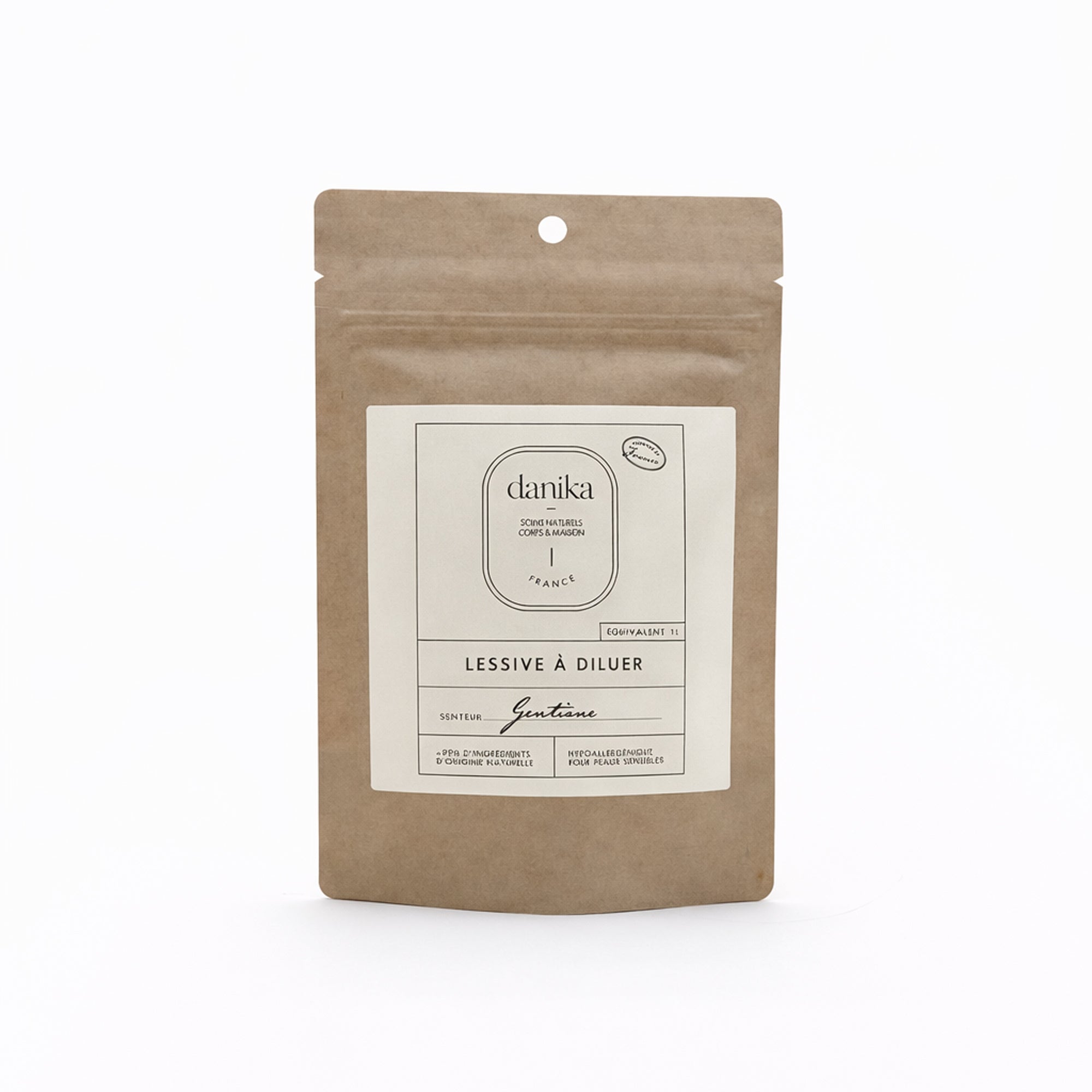
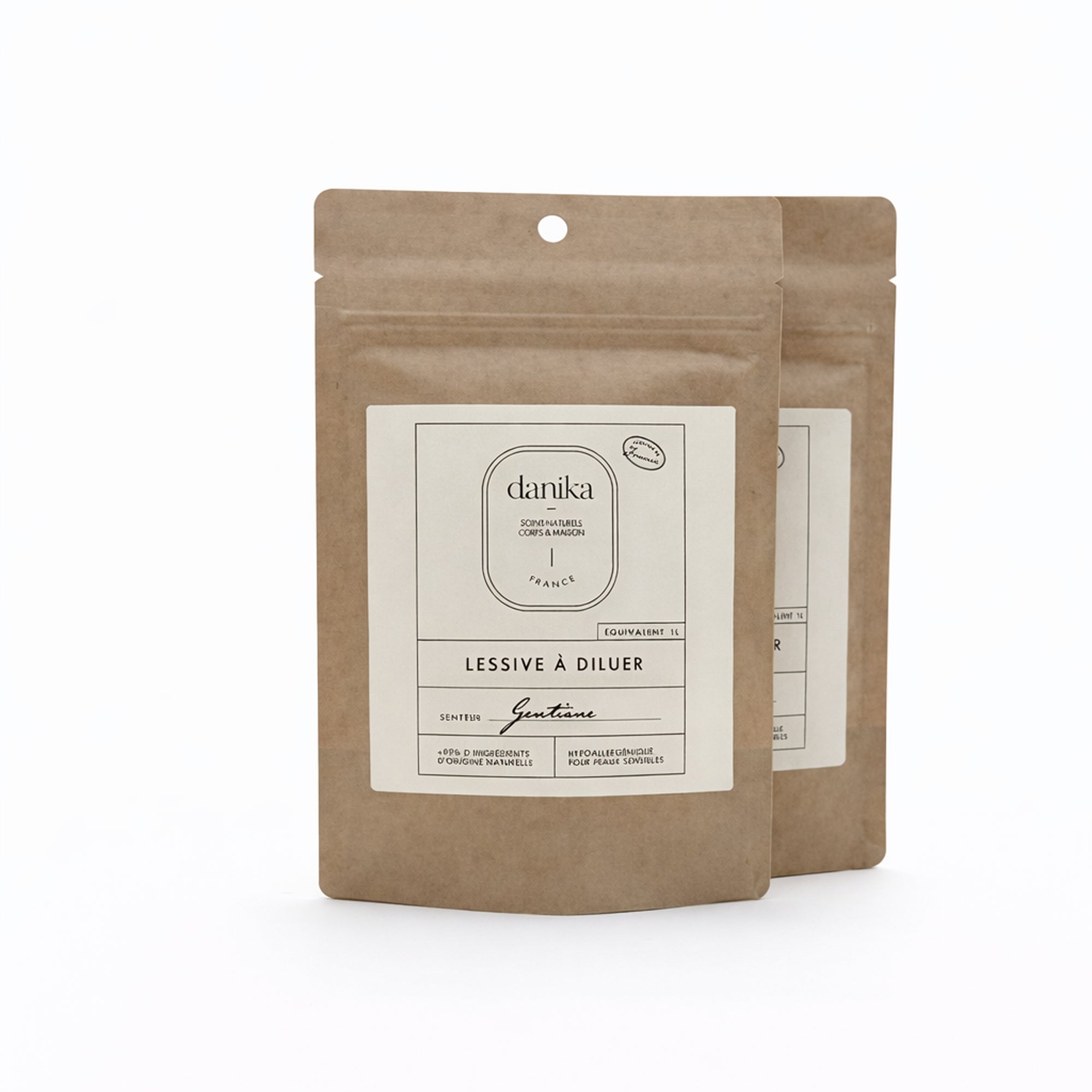
Nonetheless, many brands formulating for sensitive skin also adopt shorter, more biodegradable compositions. This is the case with Danika detergent.
Can it be suitable for eczema or dermatitis?
It can help reduce irritation linked to laundry, but it isn't a treatment.
It's mainly one lever among others (choice of textiles, wash temperature, rinsing frequency).
How do you know if a detergent is really hypoallergenic?
-
The claim should be backed by an independent assessment
-
The ingredient list should be short and readable
-
Regulated allergens should appear in low quantity or not at all
-
The fragrance should be absent or very light
-
The brand should clearly explain its commitments
Can you make your own hypoallergenic detergent?
It's best to be cautious. Some 'homemade' recipes use natural ingredients that can nonetheless be irritating (e.g. certain essential oils). DIY is interesting, but doesn't guarantee a genuinely hypoallergenic formula.
Best Sellers


Livraison gratuite dès 49€

Paiement sécurisé

Envoi rapide

Service client réactif